Digital Marketing Strategist in London
Every engagement starts with the same question: where is the cheapest measurable growth for your business right now? Sometimes that’s SEO. Sometimes it’s ads. Usually it’s a sequence, run in the right order. I’m a digital marketing strategist working with UK businesses across SEO, paid media, AI search, content and conversion — planning the channels together, then running them myself.
- One strategist across every channel
- Direct access — no account managers
- Reporting tied to leads and revenue
- London-based, working UK-wide
- Currently accepting new clients

Md Naeem HossanDigital Marketing Strategist, London
Most marketing isn't failing. It's disconnected.
Most businesses I meet aren’t short of marketing activity. They’re short of a plan that connects it. The SEO agency doesn’t speak to the ads freelancer. The person writing the blog has never seen the search terms report. The website gets redesigned and conversion tracking quietly breaks for four months before anyone notices.
That fragmentation is expensive, and it’s the reason I work the way I do. As a digital marketing strategist, my job is to look at the whole picture first — what you sell, what it’s worth, who’s already searching, what your competitors are doing, and where the money is currently leaking — and then decide what to build and in what order. Sometimes the answer is a technical SEO fix that costs very little. Sometimes it’s turning off half a Google Ads account. Often the biggest single gain is conversion rate, which makes every other channel cheaper overnight.
The services below are the tools I use. You don’t need all of them, and I’ll tell you honestly which ones you don’t. Each card links to a dedicated page with the full detail on scope, process and what’s included.
Digital Marketing Services I Provide
SEO Services
Technical SEO, on-page optimisation, content strategy and digital PR — built on entity SEO and topical authority so rankings survive algorithm updates instead of resetting with them.
Local SEO for London Businesses
Google Business Profile management, Maps optimisation, citations and review strategy for businesses that win when someone nearby searches “near me”.
Google Ads & PPC Management
Search, Shopping and Performance Max campaigns managed against one metric that matters: cost per qualified lead — not clicks, not impressions.
Meta Ads (Facebook & Instagram)
Full-funnel Meta campaigns — creative testing, audience strategy and retargeting that follows up on every visitor your other channels win.
AI Marketing & ChatGPT Visibility (GEO)
Generative Engine Optimisation: structuring your content and brand signals so ChatGPT, Perplexity and Google AI Overviews cite you when your customers ask.
Conversion Rate Optimisation
Landing page audits, A/B testing and funnel analysis. Doubling conversion rate halves the cost of every lead from every channel — CRO is the multiplier.
Social Media Marketing
Organic social strategy and content systems that build the brand familiarity your ads and search listings convert on.
Content & Email Marketing
Content that earns rankings and trust, plus email sequences and marketing automation that turn one-time visitors into repeat pipeline.
Analytics & Website Strategy
GA4, conversion tracking, dashboards and website architecture — so every decision above is made on data you can actually trust.
Why work with a Digital Marketing Strategist rather than separate specialists
There’s a version of this that most growing businesses end up in without ever deciding on it. An SEO agency on one retainer. A Google Ads freelancer on another. Someone’s nephew doing Instagram. A web developer who owns the site but doesn’t touch marketing. Everyone is competent. Nothing is joined up.
The cost shows up in three places.
Nobody owns the number.
When leads drop, each supplier can point at their own dashboard and show green. Rankings are up. Impressions are up. Engagement is up. Meanwhile enquiries have halved and no one is accountable for that, because no one was ever given the whole picture.
The same work gets paid for twice.
Keyword research done for ads, then done again for SEO. Landing pages built for a campaign that duplicate pages already ranking. Audience research repeated in three tools by three people who’ve never spoken.
Nothing compounds.
Paid traffic teaches you which messages convert — that should immediately reshape your SEO titles, your landing page copy and your email subject lines. Search Console shows you what people actually ask — that should inform your ad copy and your content plan. Split the channels across suppliers and none of that transfers.
An online marketing specialist who runs all of it sees those connections as a matter of course, because it’s the same person reading all the data. That’s the practical argument for working with one internet marketing specialist rather than four. Not that any one channel is done better in isolation — but that the decisions between channels are the ones that actually move the number, and those decisions only get made when somebody can see across all of them.
There’s a second, less discussed benefit: speed. When the person doing your SEO also has the ad account open, a change takes an afternoon, not three emails and a scheduling call.
How all my services work together
None of the services above are sold in isolation, because none of them work in isolation. Here’s how they connect in practice.
Analytics comes first, always.
Analytics & website strategy is the foundation — GA4 configured properly, conversion tracking that fires on real enquiries rather than page views, and clean channel attribution. Without it, every other decision is a guess dressed up as a strategy. This is the single most common thing I find broken.
SEO and Local SEO build the base.
SEO is slow and compounding; it’s the asset you own. For businesses serving a defined area, local SEO in London usually produces enquiries faster than national SEO, because intent on Maps is closer to the purchase.
Paid media buys time and data.
Google Ads delivers enquiries while SEO matures, and — just as valuably — tells you within weeks which keywords, offers and messages convert. Meta Ads picks up the demand that search can’t reach and retargets everyone the other channels bring in.
CRO multiplies everything above it.
Conversion rate optimisation is the only work that improves the return on every channel simultaneously. Lifting conversion from 1.5% to 3% doesn’t add 1.5% — it halves your cost per lead across SEO, Google Ads, Meta and email at once. It’s usually where I look first when a budget is tight.
Content, social and email hold the relationship.
Content and email marketing captures and nurtures the majority of visitors who aren’t ready today, while social media marketing builds the familiarity that makes people click your listing over a competitor’s.
AI search is where the next shift is happening.
AI marketing and GEO makes sure that when someone asks ChatGPT, Gemini or Perplexity for a recommendation in your category, your business is in the answer. The structural work overlaps heavily with good SEO, which is why it belongs in the same plan rather than as a separate purchase.
Read down that list and the sequencing logic becomes obvious. Measurement, then demand capture, then demand creation, then multiply. The order changes by business — a mature ecommerce brand and a new consultancy need almost opposite starting points — but the reasoning is always the same.
Working With a Specialist Produces Different Results
Md Naeem Hossan
- Direct access to the strategist who designs and runs your campaigns.
- Every audit, ad account and content brief is based on direct analysis of your specific market.
- Monthly reports tell you what moved, what didn't, and what changes next — tied to leads and revenue.
- One expert across SEO, ads, AI and CRO — channels are planned together, not sold separately.
- Your account is a meaningful share of an active practice — the incentive is different.
Typical Agency
- Your account is assigned to a junior team member you've never met.
- Strategy is pulled from a template used across dozens of clients.
- Monthly reports are auto-generated with metrics that don't connect to revenue.
- Each channel is a separate department, a separate invoice and a separate agenda.
- You're one of 40 to 80 accounts managed by the same team.
Qualifications and how I got here
Marketing is an industry anyone can enter by declaring themselves in it, so it’s reasonable to ask where the training came from. Mine is formal as well as practical.
MSc Digital Marketing with Extended Professional Practice — University of Hertfordshire
My postgraduate degree, taken in the UK. The extended professional practice element is the part that matters commercially: it puts the academic side — consumer behaviour, analytics, digital strategy — through applied client work rather than leaving it as theory. It’s also where the UK market perspective comes from, which is a different animal to marketing anywhere else in terms of competition, regulation and cost per click.
Post Graduate Diploma in Digital Marketing — IBER, United International University
A specialist practitioner qualification from the Institute of Business & Economic Research at United International University, covering search, paid media, analytics and campaign management. Less theoretical than a master’s and more focused on the platforms themselves — the two complement each other rather than repeat.
[Insert degree] — University of Chittagong
My undergraduate degree. [Insert subject and years — e.g. “BBA in Marketing, 2016–2020”.]
Beyond the certificates
Qualifications explain the grounding; the client work explains the judgement. Alongside the degrees I’ve trained [insert verified number] students in SEO and digital marketing, which is a useful discipline in itself — if you can’t explain a strategy plainly enough for someone to act on it, you don’t understand it well enough to charge for it. [Insert verified years of experience and client count.]
Recent work, with the numbers attached
Three projects that show the range — organic search built from nothing, paid search bought at an unusually low cost, and paid social scaled into real revenue. Every figure below comes from the client’s own Search Console, Google Ads or Meta Ads account, and each links to the full write-up with the method behind it.
SEO · Education & Skills Training · April – July 2026 (ongoing)
Prime Academy Bangladesh — from zero search visibility to 29,000+ impressions
Search Console showed literal zeros on day one — no impressions, no clicks. The audit found the real problem wasn’t keywords but structure: broken hierarchy, orphan pages, thin content and weak internal linking. I persuaded management to pause content work and rebuild the site architecture first, then mapped every page to a single intent-matched keyword.
Under four months from invisible to first-page territory — and still climbing. Relevant services: SEO and analytics & website strategy.
Metric
Result
Organic impressions
0 → 29,000+
Organic clicks
892
Average CTR
3.1%
Average position
7.1
Data source
Google Search Console
Google Ads · E-commerce · 21 April – 20 July 2025 · United Kingdom
UK e-commerce retailer — 1,670 qualified visitors for £700
A fixed £700 budget in one of Europe’s most competitive paid search markets. Broad targeting would have emptied it inside a week. Instead the account deliberately avoided expensive head terms and bought purchase-ready intent only — tightly themed ad groups, intent-matched ad copy, aggressive negative keyword work and daily pacing at £7.69 to keep the account live for the full quarter.
Campaign architecture is a pricing decision, not an admin one. Relevant service: Google Ads & PPC management.
Metric
Result
Clicks
1,670
Impressions
34,900
CTR
4.79%
Average CPC
£0.42
Advertising spend
£700
Data source
Google Ads dashboard
Meta Ads · Cosmetics & Personal Care, E-commerce · September 2024 – January 2025
Ecom NSL — $5,751 of Meta Ads into $35,000+ in sales
Good products, engaged following, no advertising system. I built a five-stage funnel — awareness, engagement, a review community, conversion and retargeting — and ran 45 campaigns against it. Reach cost as little as $0.12 per thousand people; qualified conversations came in from $0.17. The review community reached 2,000+ members and 100+ genuine reviews, which did most of the trust-building before purchase.
Relevant services: Meta Ads and conversion rate optimisation.
Metric
Result
Advertising spend
$5,751
Attributed sales
$35,000+
Estimated ROAS
≈6×
Impressions
7.6 million+
People reached
3 million+
Data source
Meta Ads Manager
Results depend on market, budget, margins and starting position. These are real accounts, not projections — and I’m happy to walk through the dashboards on a call.
My marketing process
Discovery and audit
Before anything is proposed, I go through what you already have: analytics and conversion tracking, Search Console, existing rankings, ad account structure and spend history, your site’s technical health, and the last twelve months of enquiry data if it exists. I’ll also want to understand your margins and your sales cycle, because a £50 product and a £15,000 service need entirely different marketing approaches.
Market and competitor analysis
Who’s ranking, who’s bidding, what they’re saying, and where the gaps are. This is where the keyword and topic map gets built, and where we work out what it realistically costs to compete for the terms that matter. Sometimes the finding is that the obvious keyword is unwinnable this year and there’s a better route in.
Strategy and prioritisation
You get a written plan: what to do, in what order, with the expected effort and impact of each item. Everything is ranked by cost-to-result, not by which service I’d prefer to sell. If the highest-value thing on the list is a landing page rewrite rather than a retainer, that’s what the plan says.
Execution
I do the work. Technical fixes, content, campaign builds, tracking, testing — delivered against an agreed schedule, with direct access to me throughout. No handover to a junior team, because there isn’t one.
Measurement, reporting and iteration
Monthly reporting in plain English: what was done, what it produced, what the data says next. I report on leads and revenue alongside the channel metrics, including the things that didn’t work. Then the plan gets adjusted on evidence and the cycle repeats.
Industries I help
I work across sectors, but the pattern-recognition is strongest in these:
Professional services
law firms, accountants, consultants and agencies, where one client is worth thousands and lead quality matters far more than lead volume.
Ecommerce and retail
where the levers are conversion rate, repeat purchase and paid efficiency, and small percentage gains translate directly into margin.
Healthcare and private clinics
dental, cosmetic, physiotherapy and specialist practices competing on local search and reputation.
Trades and home services
builders, electricians, plumbers and installers, where Google Maps and response speed decide most jobs.
Property and estate agencies
local visibility, valuation lead generation and long consideration cycles.
B2B and SaaS
long sales cycles, multiple decision-makers, and marketing that has to nurture rather than close.
Hospitality, education and startups
plus anyone selling something specific to a defined audience that can be found in search or targeted on Meta.
If your sector isn’t listed, it’s rarely a problem. The research process is the same; only the market changes.
What to realistically expect
I can’t promise numbers, and I’d be cautious of anyone in this industry who does — too much depends on your market, your margins, your website and where you’re starting from. What I can describe honestly is the shape of how these engagements progress.
Foundations and quick wins.
Tracking fixed, wasted ad spend cut, technical SEO errors cleared, obvious conversion blockers removed. This stage often produces a measurable improvement without any new spend, simply because things that were broken stop being broken.
Momentum on the paid and local side.
Google Ads and Meta campaigns stabilise and start producing at a predictable cost per lead. Local SEO improvements usually show in Maps rankings and calls before national SEO shows anywhere.
Organic starts contributing properly.
SEO is slow by nature. Rankings, impressions and non-branded traffic build steadily, and content published earlier begins to earn its keep. CRO tests have enough traffic to reach conclusions.
The plan runs on evidence.
Channels feed each other, reporting is trusted, and decisions are made from data rather than opinion. Marketing becomes a forecastable line rather than a hopeful one.
Timelines vary considerably by industry, competition and budget. The Prime Academy SEO project went from zero to 29,000+ impressions in under four months; the UK Google Ads account was producing qualified traffic at £0.42 a click within the first quarter. Different channels, different clocks.
What clients say
Every review below is independently verified — published on Clutch or Fiverr, where clients are confirmed before they can leave feedback.
“Naeem successfully rolled out a modern, SEO-friendly website that accurately depicted the client’s business structure and services. The team established a smooth workflow through timely outputs, clear communication, and prompt support. Their broad expertise impressed the client.”
Md Kamrul HasanBizz Group — Bizz Solution BD
“Md Naeem Hossan improved organic website traffic by 25%. Increased qualified leads by 20%. Achieved first-page rankings for 15+ keywords. Increased social media engagement by 30%. Completed 100% of assigned project objectives within deadlines.”
COOUK Apprenticeship Provider
“It was a great experience. He understood exactly what I needed to get done and it was a seamless process. He was assertive and very professional, the communication was perfect. I have a lot of work to get done and will definitely use him.”
kobe2024Founder & Director
5.0 ★★★★★ average on Clutch — verified reviews from real clients.
Frequently asked questions
What does a Digital Marketing Strategist actually do?
Decides what to do and in what order, then makes the channels support each other — auditing what exists, analysing competitors, setting priorities by cost-to-result. I also execute the work rather than passing it to a delivery team.
How is a Digital Marketing Strategist different from an agency?
An agency splits your account across departments and junior staff. A strategist keeps the whole picture with one person. Fewer people involved, faster decisions, one point of accountability.
Which service should I start with?
Analytics and tracking, almost always — everything after depends on trustworthy data. Then it varies: local businesses start with Local SEO, businesses needing leads this quarter start with Google Ads, and businesses already getting traffic start with CRO.
Do I have to buy every service?
No. Most engagements use two or three at a time. Part of my job is telling you which channels aren’t worth your money right now.
How much does digital marketing cost in the UK?
Audits and strategy work are fixed-fee. Ongoing work is a monthly retainer scaled to the channels involved, separate from ad spend. I quote after a consultation rather than publishing a rate card. [Insert current pricing bands once confirmed.]
Do you work with businesses outside London?
Yes. London is my base, but most of this work is location-independent and I work across the UK remotely. Local SEO is the one service where physical location genuinely changes the strategy.
How long before I see results?
Paid channels can produce enquiries within weeks; CRO improvements land as soon as tests conclude. SEO and content are slower and compound over months. Anyone guaranteeing an organic ranking timeline is guessing.
Do you offer freelance or contract arrangements?
Yes — one-off audits, fixed-scope strategy documents, ongoing monthly work, or fixed-term project support for in-house teams. It suits businesses wanting senior expertise without a full-time hire or an agency retainer.
How do you report on performance?
Monthly, in plain English, tied to leads and revenue. Each report covers what was done, what it produced, what underperformed and what changes next. You keep access to every account, so any number I report is verifiable.
What makes you different from other online marketing specialists?
You deal directly with the person doing the work, the channels are planned as one system rather than sold separately, and the reporting includes what didn’t work.
From the blog
Google Ads vs SEO: Where Should a London Business Spend First?
The honest answer: it depends on the maths, not the channel.
SEO in 2026: Entities, Topical Authority and Why Old Playbooks Fail
Google no longer just matches keywords — it maps entities and rewards genuine topical authority.
Why Your Business Needs to Show Up in ChatGPT Answers (GEO Explained)
A growing share of your customers never click a blue link.
Professional Certifications
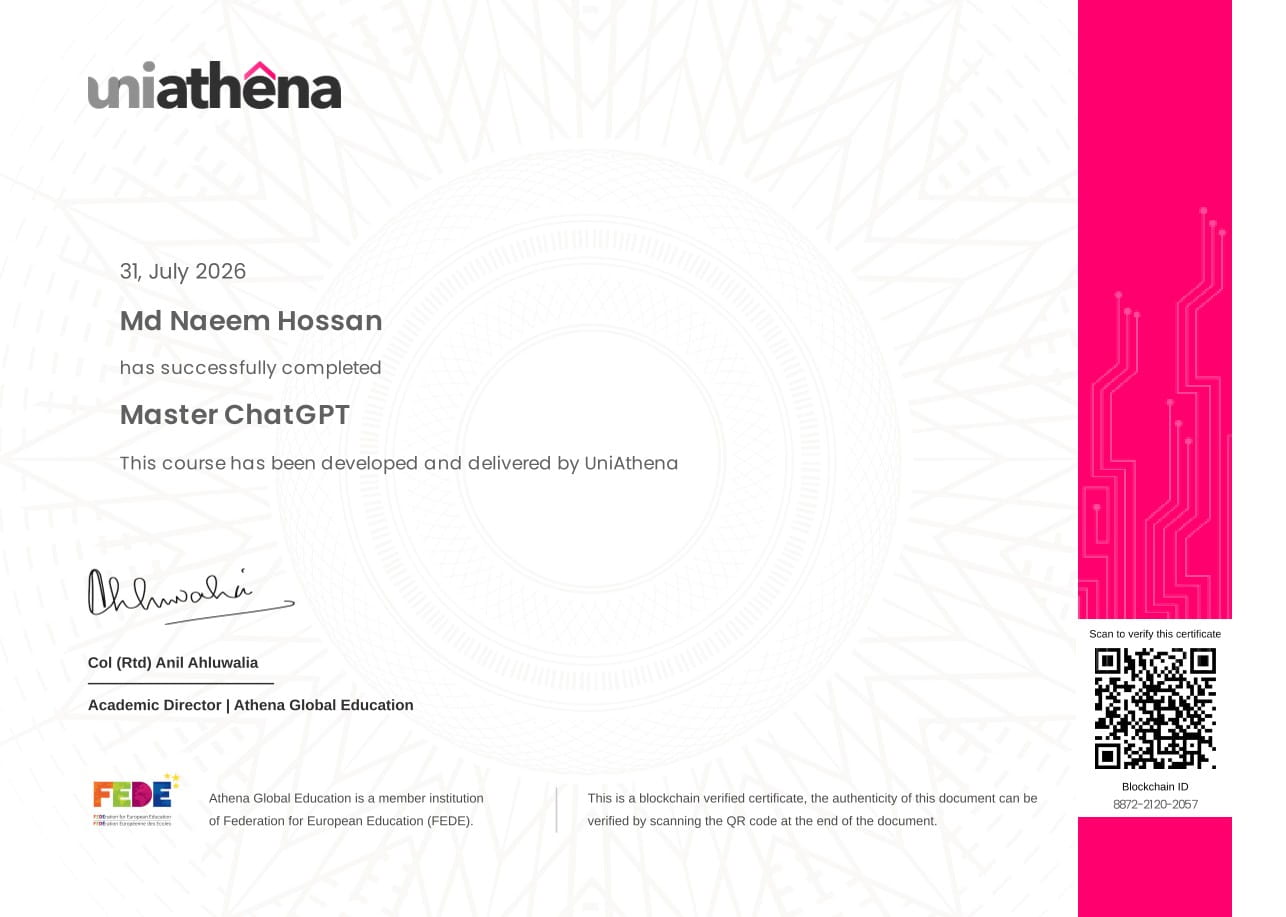
Master ChatGPT Certification
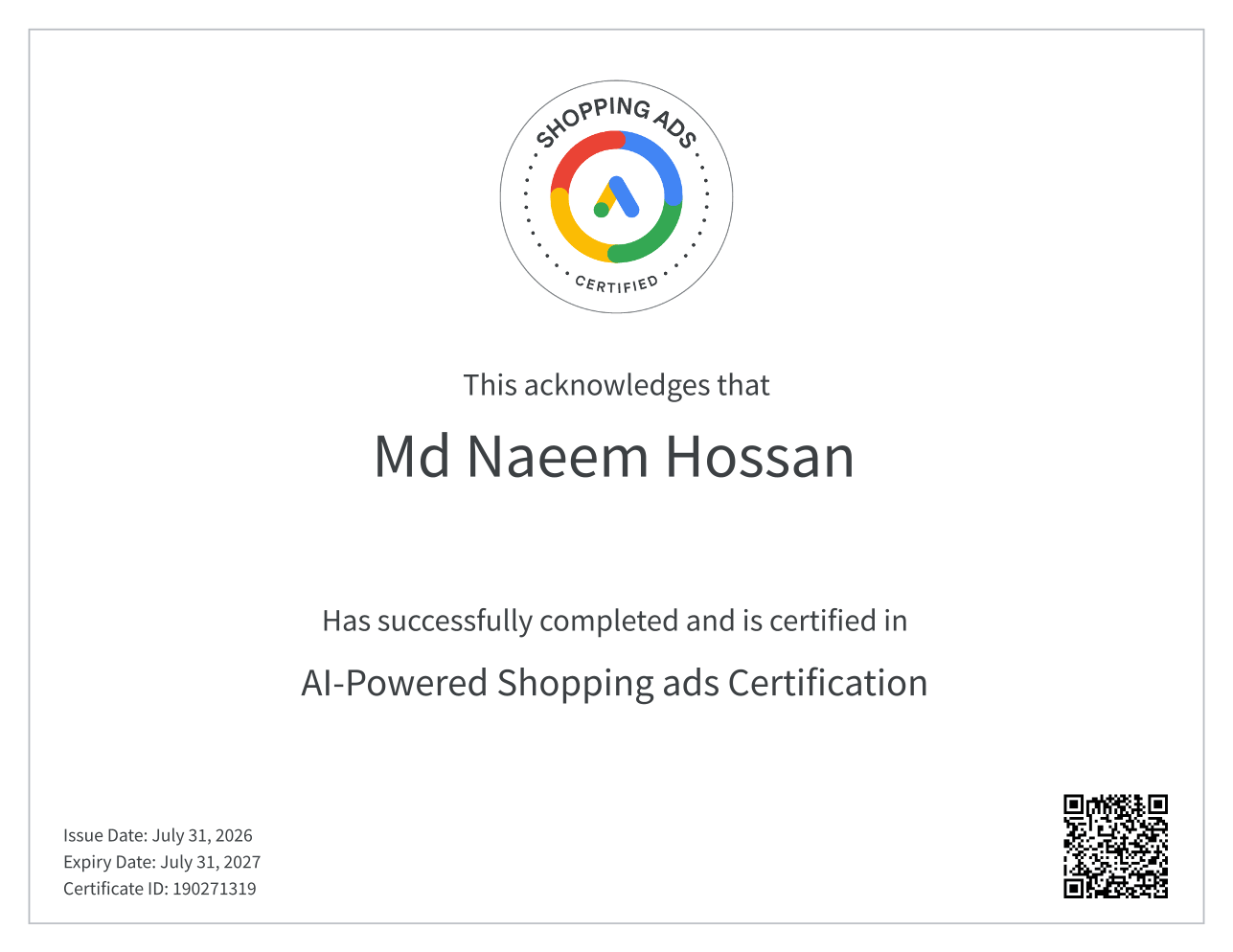
AI-Powered Shopping Ads Certification
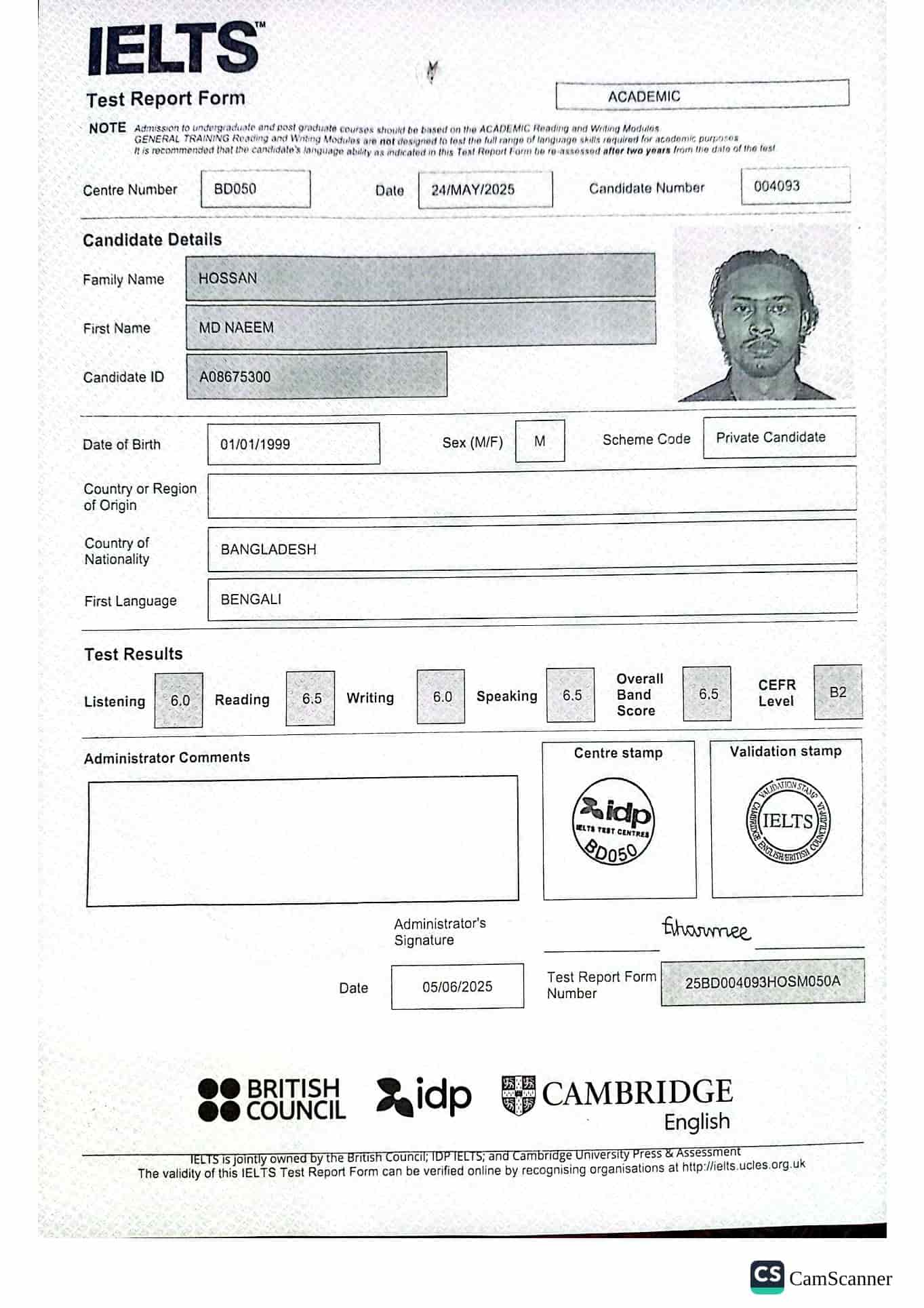
IELTS Certificate
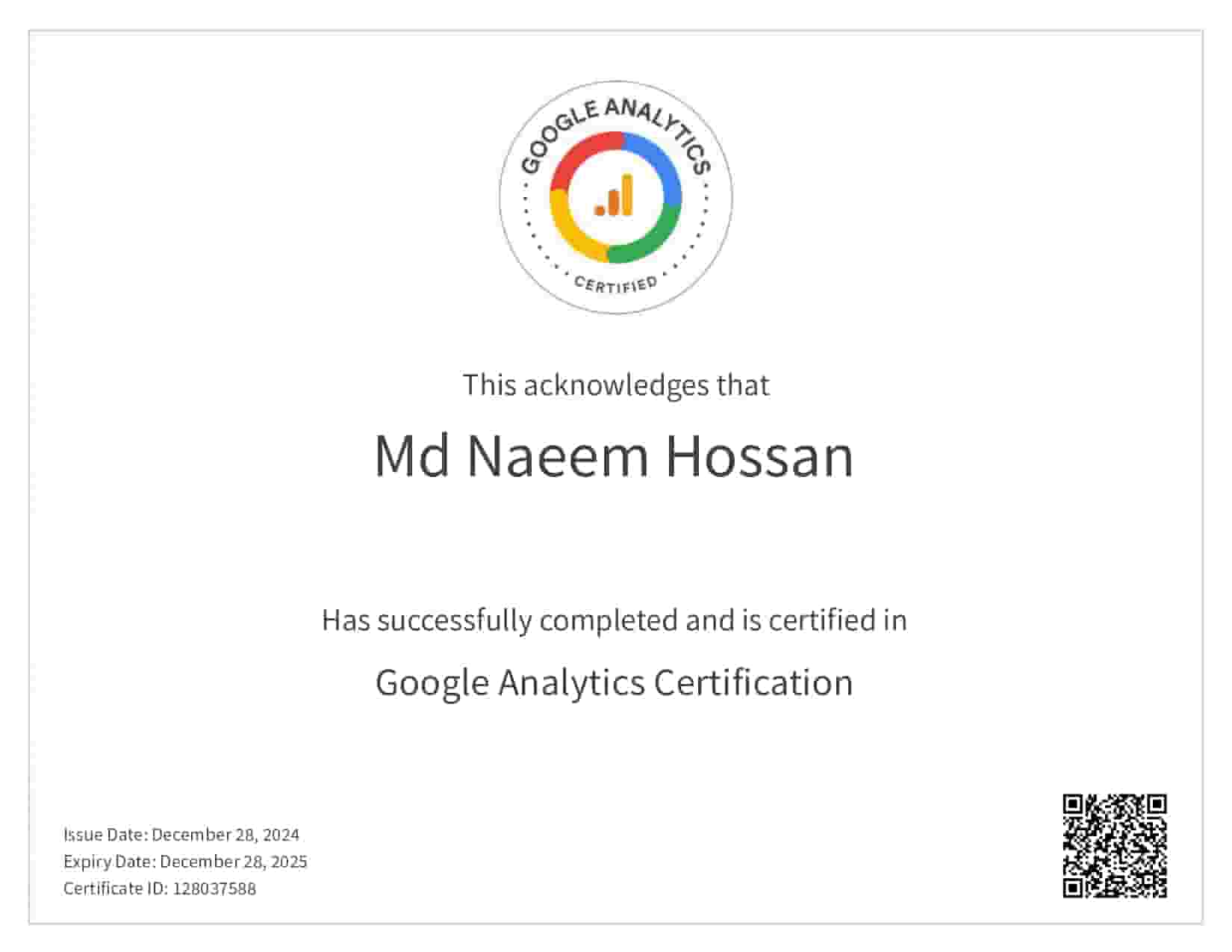
Google Analytics Certification
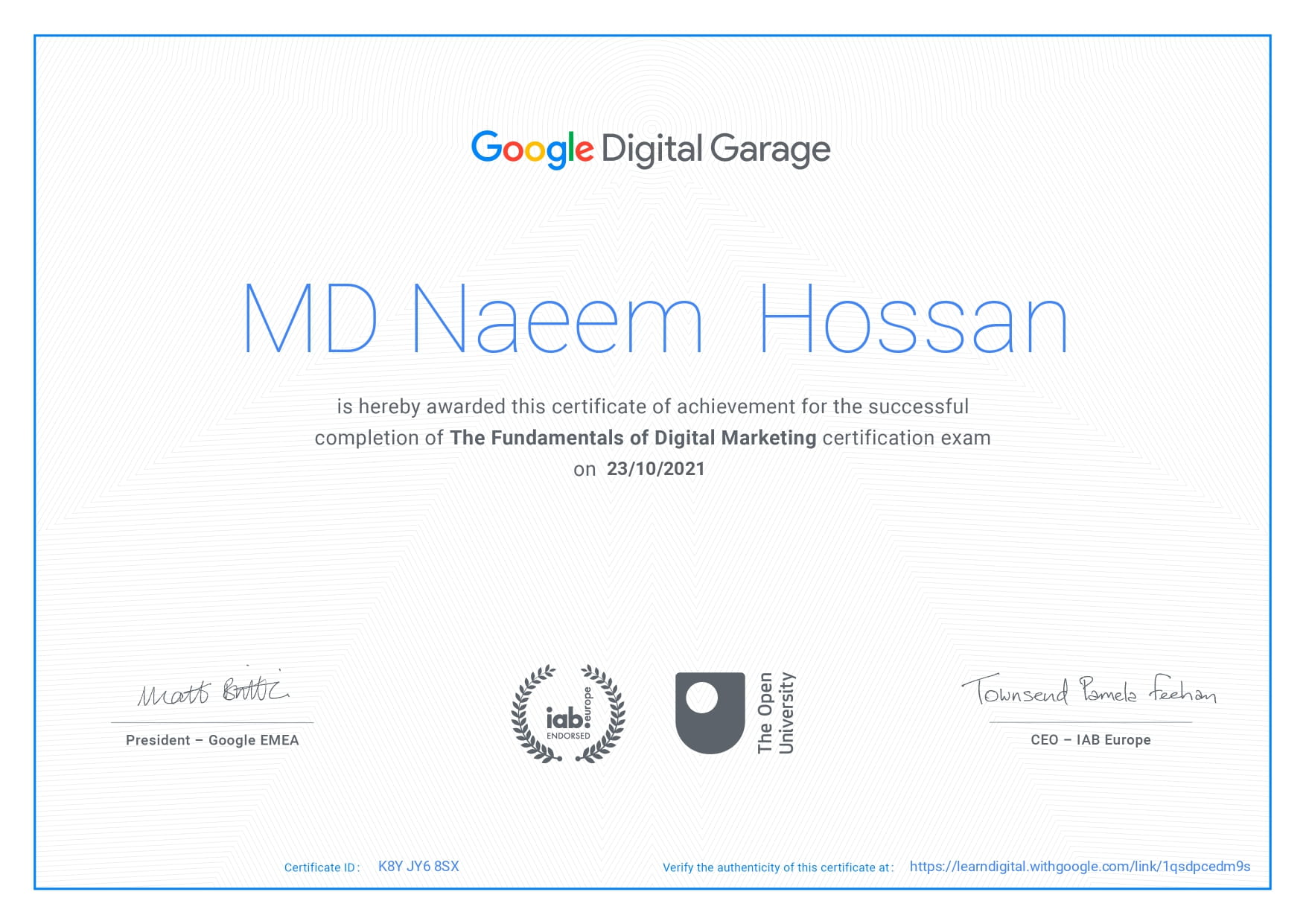
Google Digital Garage Certificate
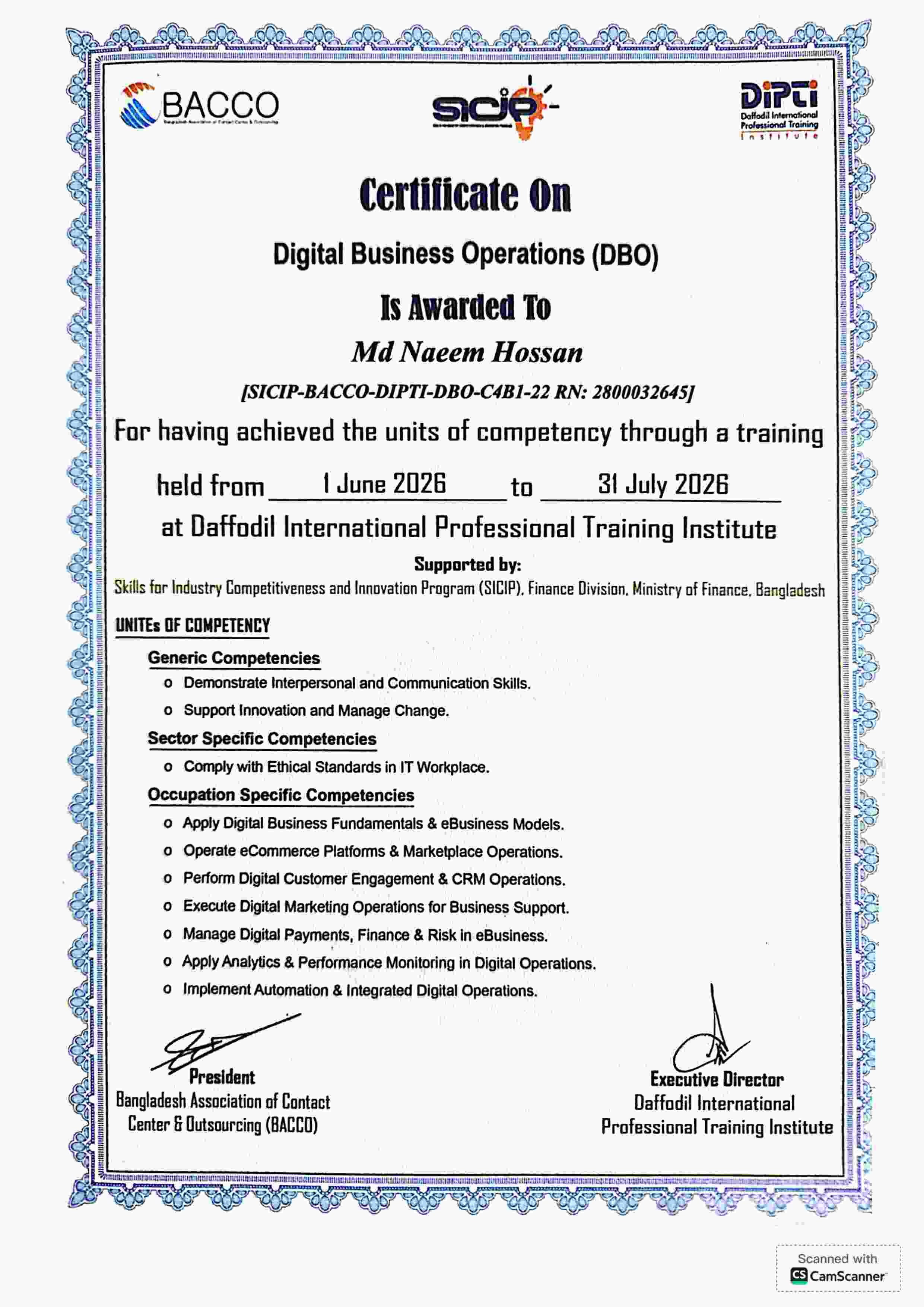
SICIP Digital Business Operations Certificate
Let's work out where your growth is actually coming from
If you’re weighing up SEO against ads, or wondering why last year’s marketing spend didn’t turn into enquiries, a short conversation will tell you more than another proposal will.
Book a free 30-minute consultation. Before we speak I’ll review your website, your rankings and your ad activity — so the call starts with answers, not questions. You’ll leave knowing the specific gaps between where you are and where you should be, and exactly what I’d do to close them. That’s true whether you go on to work with me or hand the plan to someone else.
No pitch. No pressure. No generic advice pulled from a template.
Call or WhatsApp: +44 7438 177169 · Email: mdnaeem.cu@gmail.com
- Currently accepting new clients
- Response within 24 hours
- London, UK

I’m Md Naeem Hossan, a digital marketing strategist based in London, working with UK businesses across SEO, paid media, AI search and conversion. Strategy, execution and reporting — one accountable expert. [Insert verified years of experience.]