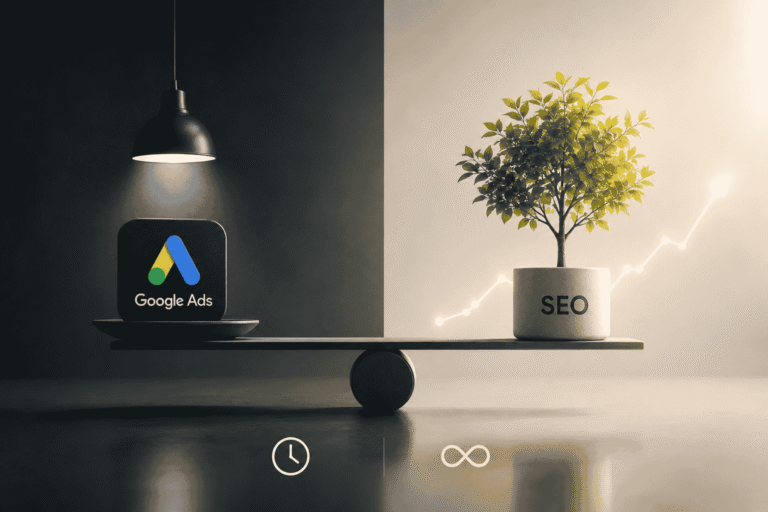
Generative Engine Optimization: The UK Guide to Getting Your Business Cited by AI (2026)
How AI search actually works, why traditional SEO alone won’t protect your visibility, and a practical roadmap for UK businesses ready to be found where customers are now looking.
Introduction
Something quietly changed in the way people find businesses. Not with a press release or a product launch, but gradually, over the past eighteen months, in the way millions of people now ask questions.
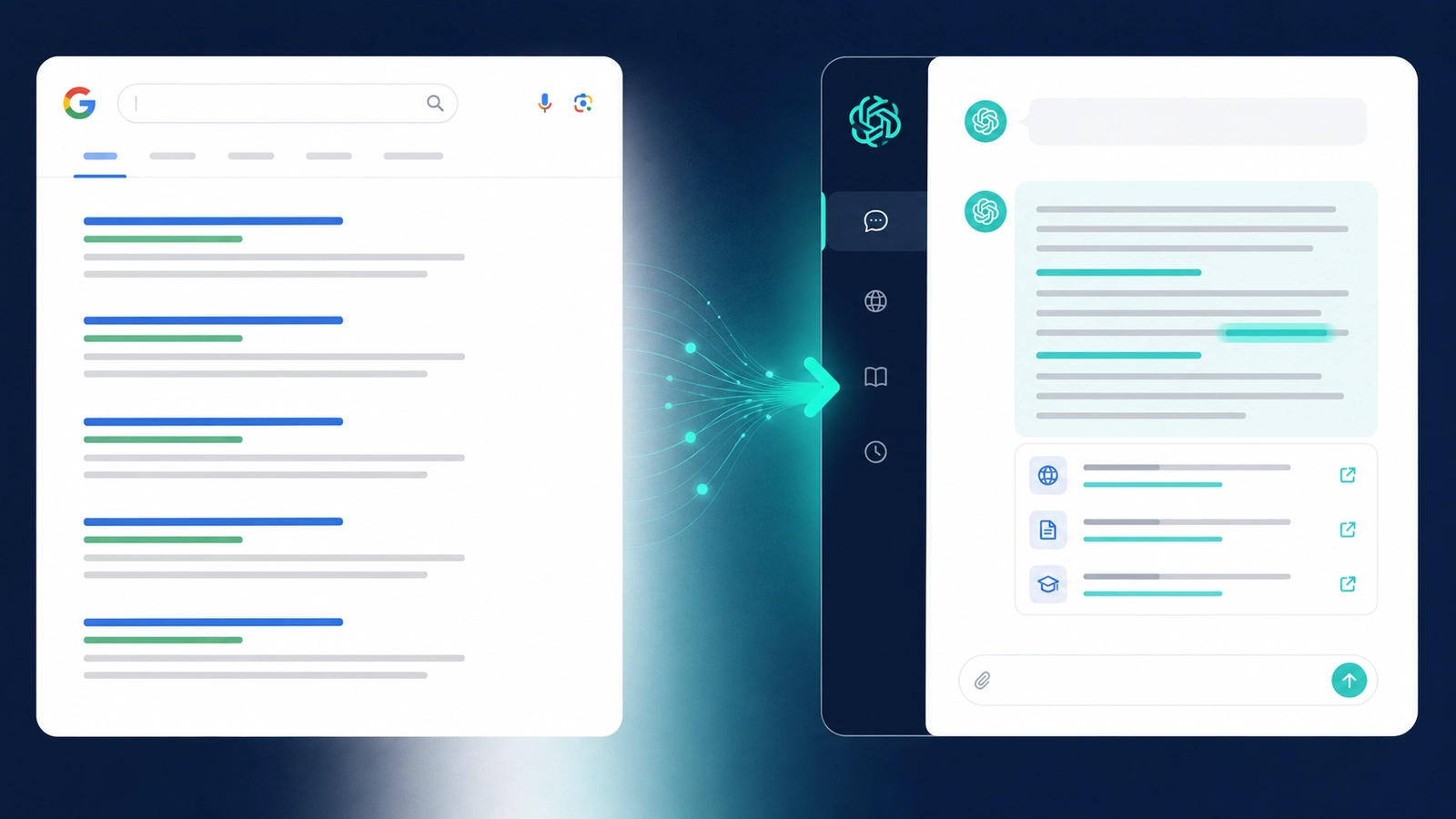
A property manager in Canary Wharf types a question into ChatGPT instead of Google. A marketing manager in Shoreditch asks Perplexity to compare CRM platforms. A founder in Bristol asks Claude to suggest agencies that specialise in B2B lead generation. None of these queries produce a list of ten blue links. They produce an answer — a synthesised, cited, confident answer — and the businesses named in that answer get the enquiry.
The businesses not named get nothing. Not even the awareness that someone was looking.
This shift has a name: Generative Engine Optimization, or GEO. And while the term is relatively new — coined by researchers at Princeton in 2023 and formalised at the KDD 2024 conference — what it describes is already reshaping how UK businesses gain visibility, earn trust, and acquire customers.
A common mistake many businesses make is treating GEO as something separate from their existing marketing. It isn’t, really. It sits on top of solid SEO. It extends it. But the rules are different enough that businesses relying purely on traditional search optimisation are watching their visibility narrow without fully understanding why.
This guide covers what GEO actually is, how each major AI platform selects its sources, what UK businesses should do about it, and — most practically — a 90-day roadmap for improving your AI visibility starting this week. No hype. No jargon for jargon’s sake. Just the clearest picture I can offer of a landscape that’s moving fast.
Table of Contents
- Why Search Is Changing
- The Rise of AI Search
- What Is Generative Engine Optimization
- Why Traditional SEO Alone Is No Longer Enough
- How AI Search Actually Works
- How ChatGPT Chooses Sources
- How Gemini Chooses Sources
- How Claude Finds Information
- How Perplexity Builds Answers
- SEO vs GEO
- Google Search vs AI Search
- Why Authority Beats Keywords
- Entity SEO Explained
- Knowledge Graphs and Why They Matter
- The Importance of Structured Data
- How Brand Mentions Influence AI
- Why Reviews Matter for AI Visibility
- How PR Supports GEO
- The Role of Fresh Content
- Internal Linking for GEO
- Who Needs GEO
- Real Business Scenarios
- A 90-Day GEO Roadmap
- Mistakes Businesses Make
- Metrics To Track
- The Future of AI Search
- Key Takeaways
- Frequently Asked Questions
- Ready to Improve Your AI Visibility?
Why Search Is Changing
For twenty-five years, “being found online” meant one thing: appearing in Google’s results. Type a query, scan the links, click. The entire digital marketing industry was built around that three-step process.
That process is splintering.
When someone asks Google a question now, they increasingly see an AI-generated answer above the links. Google’s AI Overviews appear on a growing share of queries — reported at roughly one in four searches by early 2026. The answer sits there, complete and confident, before anyone scrolls to a single website.
But it goes further than Google. People are asking ChatGPT questions they used to type into a search engine. They’re asking Perplexity to research products. They’re asking Gemini to compare services. They’re asking Claude to evaluate options. These aren’t hypothetical edge cases. ChatGPT alone processes roughly 2.5 billion prompts per day.
The practical consequence for a UK business is straightforward: your potential customers are finding answers in places you may not be visible. And unlike traditional search, where you could see your rankings and track your clicks, AI-generated answers often cite businesses without sending measurable traffic — or send traffic that gets misattributed as “direct” in your analytics.
This isn’t a crisis. It is a shift, and shifts reward the businesses that adapt early.
The Rise of AI Search
Let me be specific about scale, because vague claims about AI “taking over search” aren’t helpful.
Google still generates roughly 88–92% of all identified web referral traffic globally. That dominance hasn’t changed meaningfully. What has changed is what the remaining share looks like, and how quickly it’s growing.
ChatGPT’s referral share hit approximately 1% of all identified web referrals by mid-2026 — a figure that roughly tripled in a single month and represents about 5.5 times its level at the start of the year. That makes it the sixth-largest referring domain on the web. Small next to Google. Growing faster than anything else.
Meanwhile, generative AI as a category is diversifying rapidly. ChatGPT’s share of AI platform traffic dropped from approximately 76% to around 53% between mid-2025 and mid-2026 — not because ChatGPT shrank, but because the category expanded. Gemini climbed past 18% of AI chatbot web traffic. Claude grew faster proportionally than any other platform. Perplexity handles hundreds of millions of queries monthly.
The conversion quality of AI-referred traffic is the part most businesses overlook. Multiple analyses report AI referrals converting meaningfully better than standard organic traffic. One widely cited dataset found AI referrals converting roughly 31% better than non-AI traffic during the 2025 holiday season across US retail. The logic makes sense: a visitor who arrives after an AI has already filtered options and recommended you is further along than someone browsing a results page.
Key Insight: The volume of AI search traffic is still modest compared to Google. The quality of that traffic — and the rate at which it’s growing — is what makes this strategic rather than theoretical.
What Is Generative Engine Optimization
Generative Engine Optimization is the practice of structuring your digital presence so that AI-powered systems — ChatGPT, Google AI Overviews, Gemini, Claude, Perplexity, Copilot — can retrieve, understand, and cite your business when generating answers.
Traditional SEO asks: how do I rank higher on Google’s results page?
GEO asks: how do I become the source that AI systems trust enough to name?
The distinction matters more than it sounds. Ranking on Google means appearing in a list of options for the user to evaluate. Being cited by an AI means being presented as part of the answer itself. The user may never visit your website and still form an impression of your business because an AI mentioned you by name, described your service, or recommended you directly.
The term was introduced in a 2023 research paper by academics at Princeton, Georgia Tech, the Allen Institute for AI, and IIT Delhi. That study demonstrated something concrete: targeted optimisation of content — adding cited sources, including statistics, using direct quotations from experts — increased visibility in generative AI responses by up to 40%. The strongest methods were adding quotations (around 28% improvement), adding statistics (around 26%), and citing authoritative sources (around 25%).
These are not speculative findings. They were presented at KDD 2024, one of the most respected data science conferences. And they describe techniques that most UK businesses could implement within a month.
Consultant’s Note: One thing I’ve noticed when discussing GEO with business owners is that the name creates confusion. “Optimisation” suggests gaming a system. What you’re actually doing is making your business easier for machines to understand, verify, and recommend. Think of it less as optimisation and more as clarity — making it unmistakably obvious what you do, who you serve, and why you’re credible.
Why Traditional SEO Alone Is No Longer Enough
Traditional SEO hasn’t stopped working. Good technical foundations, strong content, and credible backlinks still matter — arguably more than ever. But they’re no longer sufficient on their own.
Here’s why. Traditional SEO is built around a specific mechanic: Google indexes your page, evaluates it against competing pages, and assigns it a position in a ranked list. Users scan that list and click. The entire strategy is about being chosen from a list.
AI search works differently. There is no list. There’s an answer. And that answer is assembled from fragments of multiple sources, synthesised by a model that’s making judgement calls about which sources are trustworthy, relevant, current, and clearly structured enough to quote.
Three things have changed the maths:
Clicks per impression are falling. Research into AI Overview queries has consistently shown organic click-through rates compressing — published estimates range from a 15% decline to a 60% decline depending on the study and query type. Informational queries are hit hardest. The blue links are still there; fewer people scroll to them.
The overlap between Google rankings and AI citations is shrinking. An Ahrefs analysis found that 76% of AI Overview citations came from Google’s top 10 organic results in mid-2025. By early 2026, that figure had dropped to roughly 38% in some analyses. For ChatGPT specifically, one study found only about 12% of cited URLs matched Google’s first page. Ranking well on Google is no longer a reliable proxy for appearing in AI answers.
Each AI platform has different preferences. Analysis of hundreds of millions of citations found only about 11% of domains are cited by both ChatGPT and Perplexity. Google AI Overviews and Google AI Mode cite the same URLs only about 14% of the time. A strategy that works for one platform may be invisible on another.
Traditional SEO Signals vs AI Citation Signals
| What traditional SEO rewards | What AI citation systems reward |
|---|---|
| Keyword-optimised page titles | Direct, quotable answers to specific questions |
| Backlink volume and authority | Verifiable claims backed by named sources |
| Content length and coverage | Structured, extractable passages |
| Exact-match anchor text | Entity clarity and brand consistency across the web |
| Internal link architecture | Corroborated facts — the same information confirmed on multiple credible sites |
| Page speed and Core Web Vitals | Freshness — recently updated, date-stamped content |
Neither column makes the other obsolete. But a business investing exclusively in the left column is building for a narrowing share of how people find information.
How AI Search Actually Works
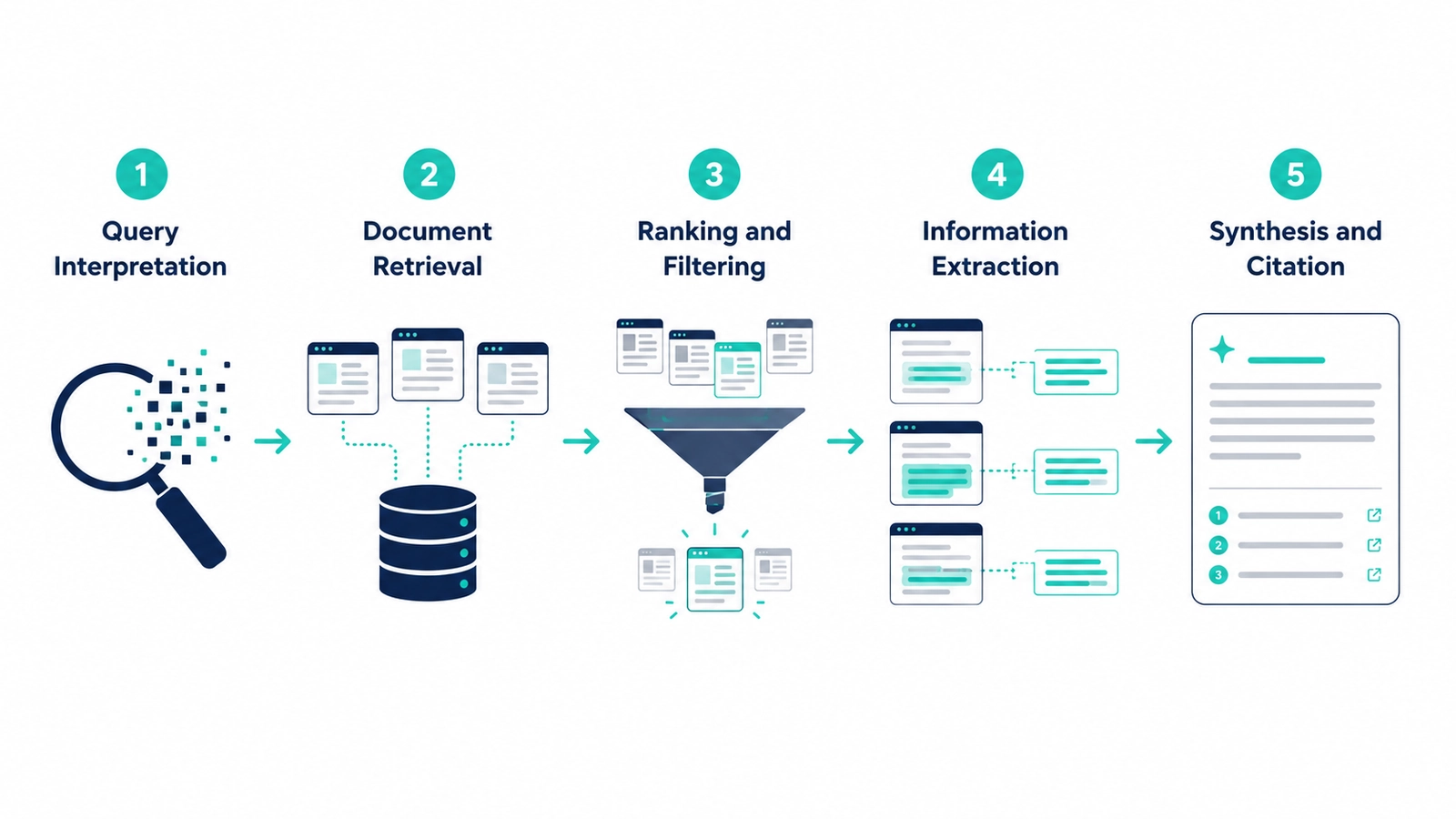
Before diving into individual platforms, it helps to understand the shared mechanics. Most AI search systems follow a broadly similar process, even though their implementations differ.
Step 1 — Query interpretation. The AI doesn’t paste your question into a search engine verbatim. It breaks your query into multiple sub-queries, each targeting a different facet of what you asked. A single question might trigger five to fifteen separate searches behind the scenes.
Step 2 — Document retrieval. Each sub-query retrieves a set of candidate pages from a search index — Bing for ChatGPT, Google’s index for Gemini, its own crawl for Perplexity.
Step 3 — Ranking and filtering. The AI evaluates retrieved documents for relevance, authority, freshness, and structure. Most candidates are discarded. Research suggests ChatGPT cites only about 15% of the pages it actually retrieves.
Step 4 — Information extraction. The AI doesn’t read whole pages the way a human does. It extracts specific passages — facts, figures, definitions, comparisons — that answer the sub-queries. Content in the first 30% of a page receives disproportionately more citations. Front-loaded answers win.
Step 5 — Synthesis and citation. The extracted information is woven into a coherent response. Sources that contributed extractable, verifiable content get cited. Sources that were relevant but poorly structured get used without attribution — or skipped entirely.
The critical point for businesses: AI systems cite passages, not pages. A well-structured paragraph with a specific, verifiable claim is more citable than an entire 3,000-word article with the answer buried in paragraph seventeen.
Quick Win: Review the opening paragraph under every H2 heading on your most important pages. Does each one answer the heading’s question directly in the first two sentences? If not, restructure. Research consistently shows that front-loaded answers earn significantly more AI citations.
How ChatGPT Chooses Sources
ChatGPT uses a retrieval-augmented generation (RAG) approach when browsing the web. Not every query triggers a web search — many are answered from training data alone. But when a question requires current information, product comparisons, or specific recommendations, ChatGPT searches the web through Bing.
What makes ChatGPT distinctive as a citation source:
- Query fan-out. A single prompt can generate five to fifteen sub-queries to Bing, covering different angles of the question. This means your content needs to answer specific sub-questions, not just the broad topic.
- Strong freshness preference. Analysis suggests ChatGPT cites URLs that are on average over a year newer than Google’s organic results for the same queries. Undated or stale content is at a significant disadvantage.
- Earned media bias. Research from the University of Toronto found that ChatGPT systematically favours third-party authoritative coverage — industry publications, news outlets, review sites — over brand-owned content. Getting written about matters as much as writing about yourself.
- Structural sensitivity. Pages with FAQ schema, clear heading hierarchies, and inline citations receive meaningfully more ChatGPT citations than equivalent unstructured content. One study reported structured pages getting roughly three times more citations.
- Bing dependence. Because ChatGPT searches through Bing, your Bing indexation matters. Sites that have strong Google presence but neglect Bing Webmaster Tools may be less visible to ChatGPT than they expect.
Action Step: Submit your sitemap to Bing Webmaster Tools if you haven’t already. Check that your robots.txt doesn’t block GPTBot (the ChatGPT crawler). These are fifteen-minute tasks that directly affect your ChatGPT visibility.
How Gemini Chooses Sources
Google’s Gemini powers both the standalone Gemini chat and Google’s AI Overviews — the AI-generated summaries that appear above organic search results. Because Gemini draws from Google’s own search index, the relationship to traditional SEO is closer here than with any other AI platform.
Key characteristics:
- Strong correlation with Google rankings — though the link is weakening. An Ahrefs analysis found 76% of AI Overview citations came from top-10 organic results in mid-2025. By early 2026, that figure had dropped substantially in several studies. Ranking well on Google helps with Gemini visibility, but it’s no longer sufficient.
- Preference for official brand sites. Multiple analyses suggest Gemini and AI Overviews favour authoritative brand-owned pages more than ChatGPT does, particularly for commercial queries.
- Structured data matters here most. Because AI Overviews are served within Google’s ecosystem, properly implemented schema markup — particularly Organisation, LocalBusiness, FAQ, and HowTo schema — carries significant weight.
- The user never leaves Google. Unlike ChatGPT, which provides citations that users can click, many AI Overview interactions result in no click at all. The answer is consumed directly. Your brand name appearing in the answer may be more valuable than a click from a traditional organic listing.
Reality Check: Being cited in a Google AI Overview without receiving a click sounds like a problem, but think about what’s actually happening. An AI with over two billion daily users just told someone your business is the answer to their question. That’s brand exposure at a scale most advertising budgets can’t buy.
How Claude Finds Information
Claude — the AI system built by Anthropic — has grown faster proportionally than any other major AI platform, with web traffic share climbing from approximately 2% to close to 9% of the generative AI category over the past year.
Claude’s approach to sourcing differs from ChatGPT’s in several practical ways:
- Emphasis on nuance and reasoning. Claude tends to provide more detailed, conditional answers that acknowledge trade-offs. Content that presents balanced analysis rather than absolute claims is more likely to be useful to Claude’s response style.
- Preference for substantive, well-cited content. Claude’s training data and retrieval lean towards content that demonstrates depth — academic references, detailed methodology, specific professional experience.
- Growing B2B presence. One traffic study found Claude accounting for roughly 18.5% of measurable B2B AI referrals. For professional services and B2B businesses, Claude visibility is increasingly important.
The practical takeaway: content that works well for Claude tends to be the kind that would impress a knowledgeable colleague — detailed, honest about limitations, supported by evidence, and structured clearly enough to extract specific claims.
How Perplexity Builds Answers
Perplexity operates as a dedicated research engine, and it behaves differently from the others in a way that creates specific opportunities.
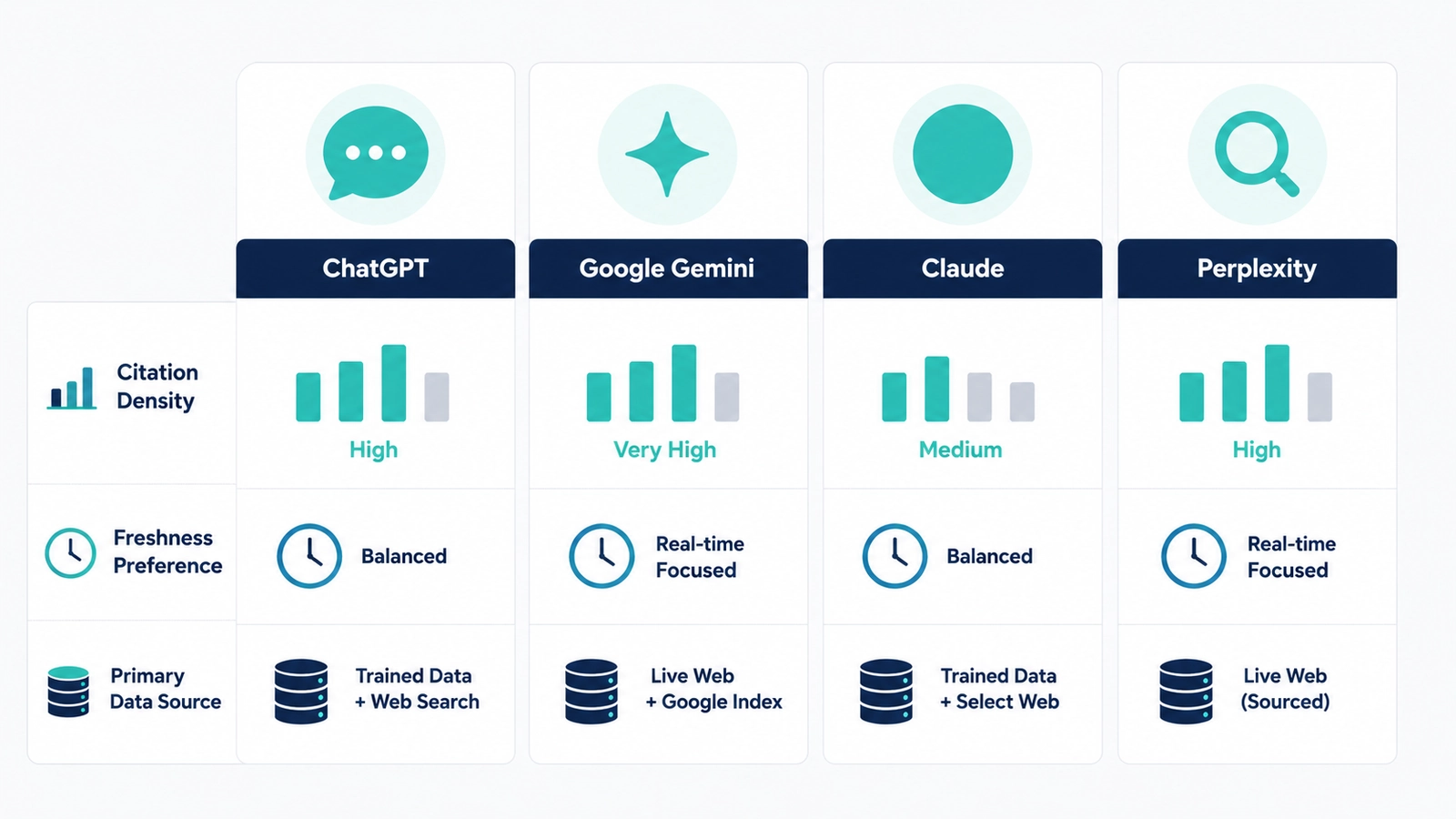
- Citation density. Perplexity provides an average of about 22 citations per response — the highest of any major AI platform. Where ChatGPT might cite three to five sources, Perplexity regularly cites twenty or more. This means more chances for your content to appear.
- Real-time data emphasis. Perplexity crawls the web actively and prioritises current information. It leans towards niche sites with granular data that larger encyclopaedic sources don’t cover.
- User-generated content inclusion. Perplexity draws from platforms like Reddit and specialist forums more than other AI systems do. Genuine community discussions where your business or brand is mentioned can influence Perplexity citations.
- Verifiable facts favoured. Perplexity prizes passages it can extract and attribute cleanly. Self-contained statements with specific figures outperform buried observations within long paragraphs.
How the Four Major AI Platforms Differ in Source Selection
| Platform | Primary index | Avg. citations per answer | Freshness bias | Strongest content signal |
|---|---|---|---|---|
| ChatGPT | Bing | 3–7 | Strong (newest content preferred) | Earned media + structured pages |
| Gemini / AI Overviews | 3–5 | Moderate | Google rankings + schema markup | |
| Claude | Training data + web | 2–5 | Moderate | Depth, nuance, cited sources |
| Perplexity | Own crawl + partners | ~22 | Strong (real-time focus) | Granular, verifiable, extractable data |
SEO vs GEO
This is the comparison most people ask about first, and the answer is simpler than the debate suggests: GEO is not a replacement for SEO. It’s an extension.
SEO makes your business visible in search results. GEO makes your business citable in AI answers. Both aim to get you found, but by different systems with different selection criteria.
SEO vs GEO Across Eight Dimensions
| Dimension | SEO | GEO |
|---|---|---|
| Primary goal | Rank on a results page | Be cited in an AI-generated answer |
| What you’re optimising for | Google’s algorithm | Multiple AI models (ChatGPT, Gemini, Claude, Perplexity) |
| Success metric | Rankings, organic traffic, conversions | Citation frequency, brand mentions, AI referral traffic |
| Content format | Long-form, keyword-targeted pages | Quotable, structured, fact-rich passages |
| Key trust signals | Backlinks, domain authority | Cross-web corroboration, structured data, entity clarity |
| Freshness requirement | Important but forgiving | Critical — stale content gets dropped |
| Speed of impact | 3–12 months | Variable — some changes take effect within weeks |
| Measurement maturity | Mature (Search Console, GA4, rank trackers) | Early stage — manual testing, emerging tools |
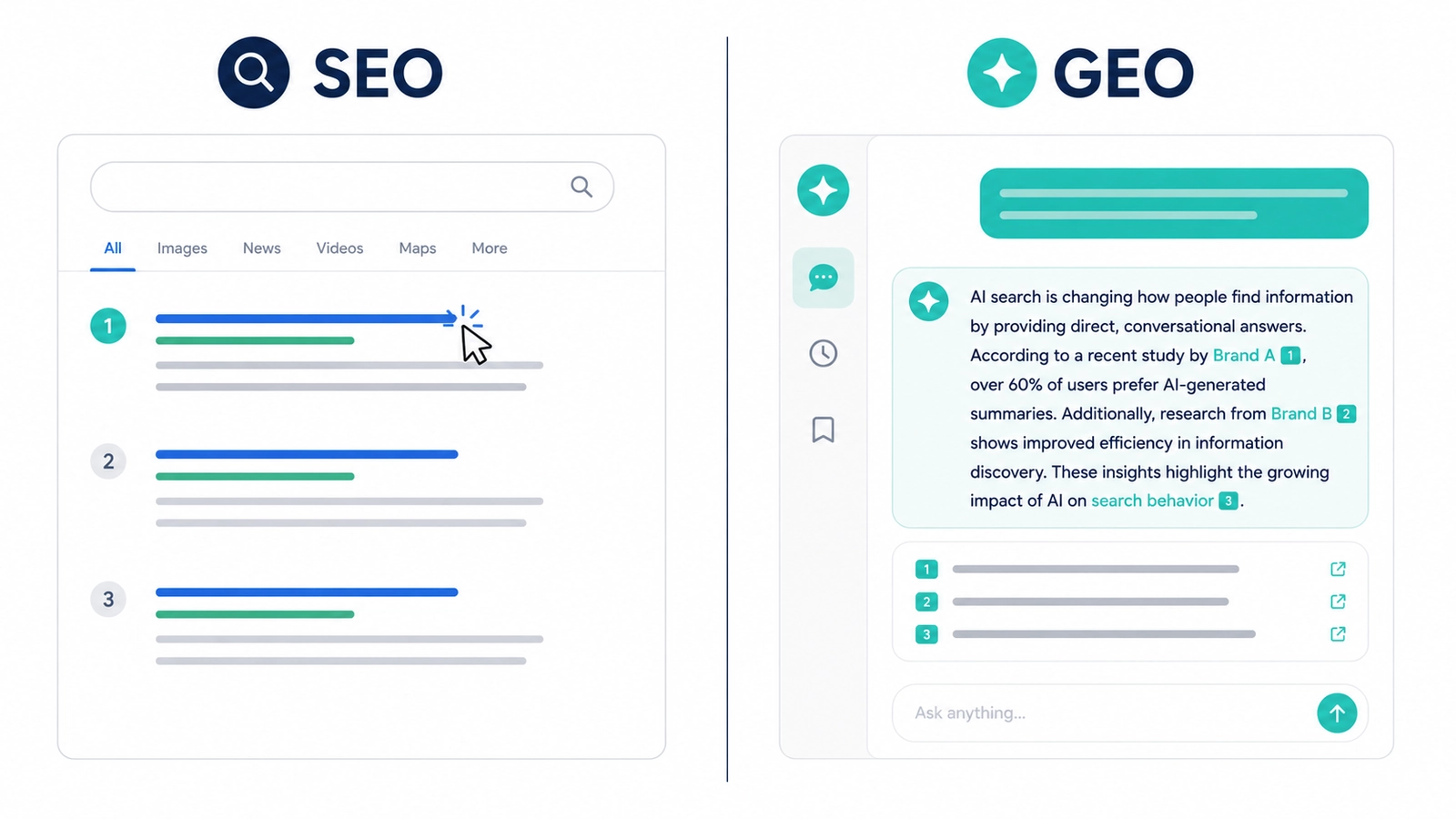
The businesses I see performing best are those treating GEO as a layer on top of strong SEO — not as an alternative. If your technical SEO is broken, your site isn’t crawlable, and your content is thin, GEO won’t rescue you. Fix the foundations first, then build the AI visibility layer.
Consultant’s Note: A common mistake many businesses make is thinking they need to choose between SEO and GEO. You don’t. Virtually everything that makes content more citable by AI — clear structure, verifiable facts, authoritative sourcing — also makes it rank better on Google. The work compounds.
Google Search vs AI Search
This is a different question from SEO vs GEO, and it’s worth separating clearly.
Google Search vs AI Search Comparison
| Dimension | Google Search (traditional) | AI Search (ChatGPT, Perplexity, Gemini, Claude) |
|---|---|---|
| What the user sees | A list of links to evaluate | A synthesised answer with optional citations |
| User effort | High — scanning, clicking, comparing | Low — the answer is assembled for them |
| Business outcome | Traffic (clicks to your website) | Recommendation (your brand named in the answer) |
| Measurability | Strong (Search Console, GA4) | Weak and fragmented |
| Trust model | “This result was relevant enough to rank” | “This source was credible enough to cite” |
| Competitive visibility | You see your competitors in the same results | You may never know who else was considered |
| User journey | Discovery → click → evaluate → convert | Discovery → answer → (maybe) click → convert |
| Volume (2026) | ~88–92% of all web referral traffic | ~1–3% of all web referral traffic, growing fast |
The volume disparity is important context. Google is not being replaced. But the margin — the fastest-growing segment of how people find information — belongs to AI search. And historically, the businesses that invest early in emerging channels gain advantages that compound.
Why Authority Beats Keywords
For two decades, the core unit of SEO strategy was the keyword. Find what people search, write a page targeting that phrase, build links to it. The system rewarded keyword alignment above almost everything else.
AI systems don’t work this way. They don’t match keywords to pages. They evaluate whether a source is authoritative enough to trust with a specific claim.
Think of it this way. If you asked a well-informed friend to recommend a solicitor in London, they wouldn’t consult a keyword list. They’d think about which firms they’ve heard of, read about, or seen mentioned by other credible people. They’d consider reputation, specialisation, visibility in the professional community.
AI systems do something functionally similar. They evaluate your authority through a combination of signals: how often your business is mentioned across the web, whether those mentions appear on credible sites, how consistently your business information appears across platforms, and whether your content demonstrates genuine expertise rather than just covering a topic.
This doesn’t mean keywords are irrelevant. You still need to write about what people actually search for. But the weighting has shifted. A page stuffed with exact-match keywords but lacking authority signals is progressively less visible — in Google as well as AI.
Key Insight: The businesses that tend to perform best in AI search aren’t the ones with the most pages. They’re the ones with the clearest identity. AI systems are increasingly good at identifying entities — distinct, recognisable things — and terrible at distinguishing vague, undifferentiated content from other vague, undifferentiated content.
Entity SEO Explained
Entity SEO is the practice of establishing your business as a clearly defined entity that search engines and AI systems can recognise, categorise, and connect to other entities.
An entity, in this context, is anything that can be distinctly identified: a person, a company, a product, a place, a concept. Google has been moving towards entity-based understanding for years. AI systems have accelerated this dramatically.
What a well-defined business entity looks like to an AI:
- A consistent name, address, and description across your website, Google Business Profile, Companies House, LinkedIn, and industry directories
- A clear association between your business and the services you provide
- Connections to known entities — professional bodies you belong to, partners you work with, places you operate
- Structured data on your website that explicitly declares these relationships
- Corroboration — other credible sources confirming the same facts about your business
What a poorly defined entity looks like: a business that describes itself differently on every platform, has inconsistent contact details, no structured data, no third-party mentions, and content that could belong to any of a hundred similar businesses.
Most SMEs underestimate how much this matters. When ChatGPT encounters a query like “marketing agency specialising in education sector London,” it’s looking for entities that match those attributes. If your business entity isn’t clearly defined and connected to those concepts, you’re invisible to the query — regardless of how good your services actually are.
Action Step: Google your business name in quotation marks. Then search it on Bing, LinkedIn, Companies House, and your main industry directory. Is the information identical? If there are inconsistencies in your name, address, phone number, or business description, fix them this week. This is the most fundamental GEO action and it takes a couple of hours.
Knowledge Graphs and Why They Matter
Google’s Knowledge Graph is a database of entities and their relationships. When you search for a well-known company or person and see an information panel on the right side of the results, that’s the Knowledge Graph in action.
Getting your business into the Knowledge Graph — or strengthening your presence there — directly influences AI visibility. AI Overviews draw heavily from Knowledge Graph data. And the same principles of entity clarity that get you into the Knowledge Graph make you more recognisable to every AI system.
How to strengthen your Knowledge Graph presence:
- Claim and fully optimise your Google Business Profile
- Ensure your Wikipedia entry, Wikidata item, and Companies House listing are accurate (if applicable)
- Implement Organisation or LocalBusiness schema on your website
- Maintain consistent NAP (name, address, phone) across all platforms
- Build mentions on authoritative sites that Google already trusts
For most UK small businesses, a Wikipedia entry is unrealistic. But Wikidata — the structured data repository behind Wikipedia — has lower notability requirements and directly feeds Google’s Knowledge Graph. A well-constructed Wikidata entry for your business, if it’s genuinely notable enough to warrant one, can significantly improve entity recognition.
The Importance of Structured Data
Structured data — implemented as JSON-LD schema markup on your website — is how you explicitly tell search engines and AI systems what your content means, rather than hoping they work it out.
This is no longer optional. Schema markup is the primary way AI systems understand your content with confidence. A page that says “We offer commercial cleaning in London” is ambiguous to a machine. A page with LocalBusiness schema declaring the same thing with structured service types, area served, and contact information is unambiguous.
The schema types that matter most for GEO:
- Organisation / LocalBusiness — who you are, where you operate, how to contact you
- Service — what you offer, described with specific service types
- FAQ — question-and-answer pairs that AI systems can extract directly
- HowTo — step-by-step processes
- Article / BlogPosting — content with author, publication date, and update date clearly declared
- Review / AggregateRating — social proof that AI systems can reference
- Person — for consultants and professionals whose individual expertise matters
Quick Win: If you do nothing else from this article, add FAQ schema to your three most important service pages. Each FAQ should answer a genuine question your customers ask, in two to four clear sentences. Research suggests pages with FAQ schema receive significantly more AI citations — in one study, approximately 40% higher ChatGPT citation rates.
How Brand Mentions Influence AI
A traditional SEO mindset focuses on links: another site linking to yours passes authority. GEO cares about something broader: mentions.
An AI system evaluating whether to cite your business doesn’t only count links pointing to your domain. It considers how frequently your business name appears across credible sources — linked or not. An article in a trade publication mentioning your company by name, even without a hyperlink, contributes to your entity’s perceived authority.
This is sometimes called “implied links” or “co-citation,” and it’s been a signal in Google’s algorithm for years. AI systems amplify its importance because they’re fundamentally trying to answer the question: “Is this entity widely recognised and consistently described?”
The practical implication: getting mentioned matters as much as getting linked. Guest articles, industry awards, speaking engagements, partnerships, PR coverage, directory listings — anything that puts your business name on a credible third-party site strengthens your AI visibility.
Why Reviews Matter for AI Visibility
Reviews have always influenced local SEO. In the GEO context, their role expands.
When an AI system is asked to recommend a business, it evaluates trustworthiness. Reviews on Google, Trustpilot, industry-specific directories, and other platforms contribute to the corroboration that AI systems look for. A business with two hundred genuine reviews across multiple platforms looks fundamentally different to an AI than one with three reviews on a single site.
Beyond quantity, review content matters. Reviews that mention specific services, locations, or outcomes provide keyword-rich, third-party corroboration of your entity attributes. “They handled our office renovation in Camden brilliantly” teaches an AI that your business does renovation work in Camden — stated by a customer, not by you.
Quick Win: Set up a systematic review request process. After every completed project or engagement, send a brief, specific request for a Google review. Consistency matters more than volume — ten new reviews over ten weeks signals more to AI systems than ten in one week followed by silence.
How PR Supports GEO
Digital PR has always been valuable for link building. For GEO, its value increases substantially because it generates exactly what AI systems look for: authoritative third-party mentions.
When a trade publication covers your business, that article enters the training data and retrieval sets of multiple AI systems. When a journalist quotes your founder, that creates a named association between your entity and expertise on a specific topic. When your company is listed in a “best of” article on an industry site, AI systems register that endorsement.
The businesses that tend to perform best in AI search have one thing in common: they’ve been written about. Not by themselves, but by credible third parties who had no commercial reason to promote them.
This doesn’t require a dedicated PR agency or a large budget. Most UK SMEs can generate meaningful coverage through:
- Submitting expert commentary to industry publications (many actively seek contributor opinions)
- Responding to journalist requests on platforms like ResponseSource or Connectively
- Publishing original research, surveys, or data that others will reference
- Speaking at industry events, even small ones, which typically generate write-ups
- Getting listed in relevant “top agencies” or “best providers” roundups
The Role of Fresh Content
AI systems have a measurable freshness bias — particularly ChatGPT, which one analysis found cites URLs averaging over a year newer than Google’s organic results for the same queries.
This creates both a challenge and an opportunity. The challenge: content you published two years ago and never updated is progressively less likely to be cited. The opportunity: regularly updating existing content with current dates, recent statistics, and fresh examples gives you an advantage over competitors with older material.
Research suggests that visible year signals — including “2026” in titles and headings — improve citation rates by approximately 30%.
Action Step: Audit your top ten pages by traffic. Add the current year to the title tag and H1 where natural. Update any statistics or examples that are more than twelve months old. Add a “Last updated: [month year]” line. This takes an afternoon and can meaningfully improve citation rates across multiple AI platforms.
Internal Linking for GEO
Internal linking has always mattered for SEO. For GEO, it serves a slightly different purpose: it helps AI systems understand the relationships between your content and build a coherent picture of your expertise.
When your content about “commercial cleaning pricing” links to your content about “commercial cleaning contracts” and both link to your main “commercial cleaning London” service page, you’re creating a topic cluster that signals depth. AI systems evaluating your authority on “commercial cleaning” will recognise this cluster as evidence of genuine coverage.
Three principles for GEO-oriented internal linking:
- Link from supporting articles to your pillar pages using descriptive anchor text (not “click here” or “learn more”)
- Ensure every service page links to relevant case studies, blog posts, or guides that demonstrate your expertise
- Build hub pages that collect your best content on a topic — these act as entity maps for AI crawlers
Who Needs GEO
Short answer: any business that benefits from being recommended.
Longer answer with more useful specificity:
High Priority
- Professional services (legal, accounting, consulting, financial advice) — these are researched purchases where AI recommendations carry significant weight
- B2B service providers — decision-makers increasingly use AI to shortlist vendors
- Healthcare and specialist practitioners — patients are asking AI systems about conditions and treatments
- Education providers — prospective students research courses through AI
- Local service businesses in competitive markets — the map pack is getting an AI layer
Medium Priority
- Ecommerce brands with products people research before buying
- Technology companies and SaaS providers
- Recruitment firms and staffing agencies
- Property and construction services
Lower Immediate Priority (But Growing)
- Commodity retail where brand doesn’t differentiate
- Purely local businesses in non-competitive markets
- Very early-stage businesses without an established online presence to build on
Real Business Scenarios
Let me describe three scenarios I’ve observed — not specific client stories, but patterns that recur across businesses I encounter.
Scenario 1: The Invisible Specialist
A boutique architecture firm in London does exceptional conservation work. Their website is beautiful. Their portfolio is outstanding. But their content is entirely project-based — images with one-line captions. No explanatory content. No structured data. No FAQ schema. No presence on industry directories. When someone asks ChatGPT to recommend architects specialising in listed building work in London, the firm doesn’t appear. Not because their work is poor, but because no AI system can identify them as an entity with that specialism.
Scenario 2: The Authority Without Structure
An IT managed services provider has been blogging weekly for four years. They have hundreds of articles, good domain authority, and solid Google rankings. But their content is formatted as continuous prose with no clear headings, no direct answers in opening paragraphs, and no schema markup. Google ranks them. AI systems can’t extract citable passages from them, so they rarely appear in AI answers despite having more expertise than competitors who do.
Scenario 3: The Newcomer Who Got It Right
A compliance consultancy launched eighteen months ago with twelve deeply researched pages, comprehensive FAQ schema, active digital PR generating third-party mentions, and complete structured data. They’re outperforming firms ten times their age in AI citations — not because they have more content, but because their content is structured for extraction, corroborated by third parties, and clearly defines their entity.
The pattern across all three is consistent: AI visibility rewards clarity and structure over volume and history.
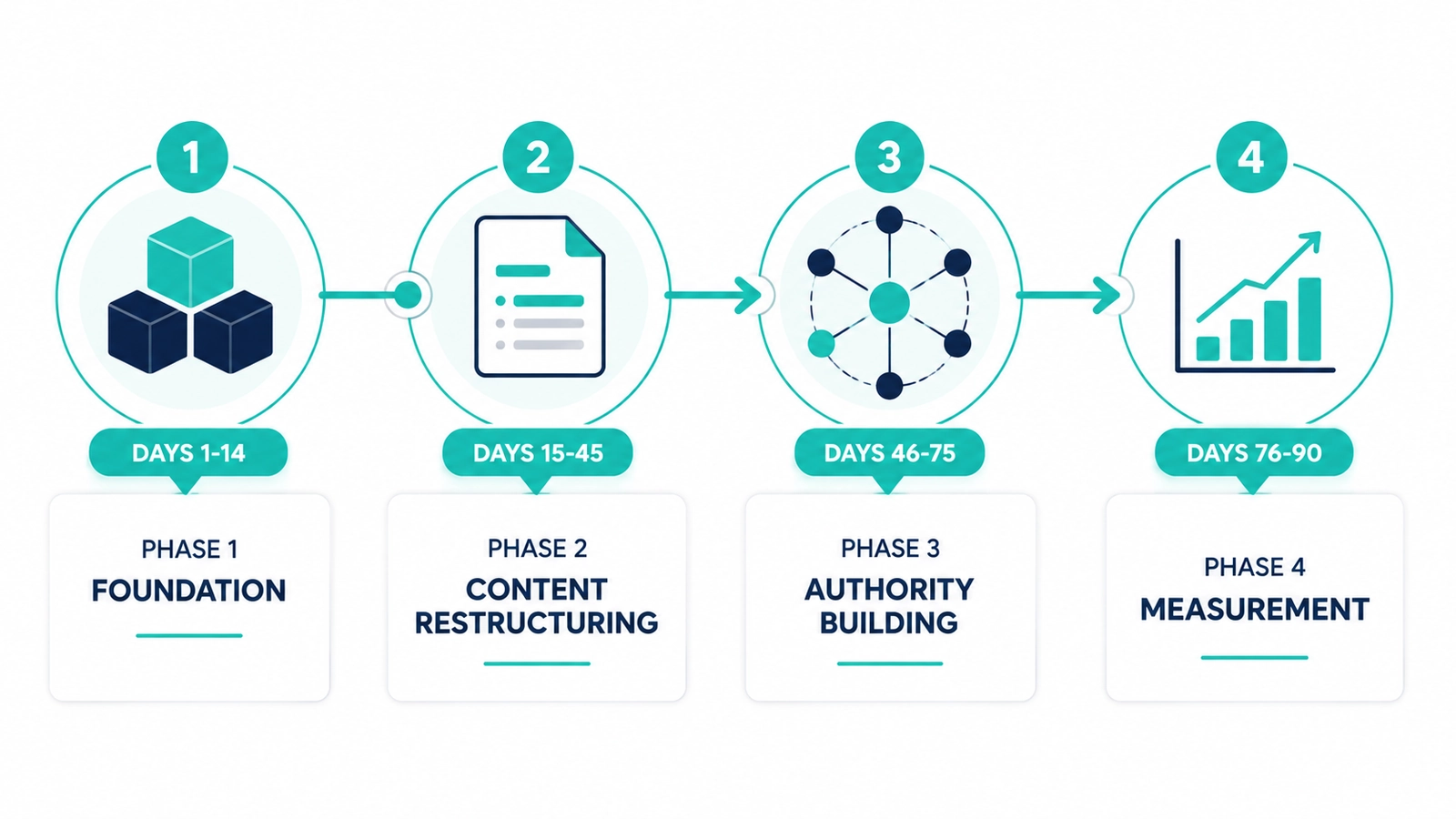
A 90-Day GEO Roadmap
This is the sequence I’d recommend for a UK business starting from a reasonable SEO foundation. If your technical SEO is fundamentally broken — critical crawl errors, no indexation, no content — fix that first.
Days 1–14: Foundation
- Audit entity consistency: is your business name, address, phone number, and description identical across your website, Google Business Profile, Companies House, LinkedIn, and all major directories?
- Implement or fix Organisation / LocalBusiness schema markup
- Add FAQ schema to your top five service or product pages
- Submit your sitemap to Bing Webmaster Tools
- Check robots.txt for AI crawler blocks (GPTBot, ClaudeBot, PerplexityBot)
- Update your most important pages with current year references and recent data
Days 15–45: Content Restructuring
- Review each key page’s opening paragraph under every H2 heading — does it directly answer the heading’s question in the first two sentences?
- Add specific, verifiable claims where possible: numbers, dates, named sources
- Build or improve three hub pages that cluster your best content by topic
- Strengthen internal linking between related content
- Publish two pieces of original, data-backed content on topics where you have genuine expertise
Days 46–75: Authority Building
- Identify ten credible third-party sites where your business should be mentioned (directories, industry publications, partner sites)
- Submit or update listings on those sites
- Begin a systematic PR effort: three journalist responses, one guest article, one original data piece
- Start a review acquisition programme: request one review per completed project
- Audit and update your Wikidata entry if applicable
Days 76–90: Measurement and Iteration
- Run your target queries through ChatGPT, Gemini, Claude, and Perplexity with web search enabled — log which queries mention your business
- Set up baseline tracking for AI referral traffic in GA4 (filter by referrer: chatgpt.com, perplexity.ai, claude.ai)
- Compare your citation presence against two to three key competitors
- Identify the gap: which platforms cite you and which don’t? Which queries are you visible for and which aren’t?
- Adjust the next 90 days based on evidence, not assumptions
Consultant’s Note: The biggest surprise for many clients is that a meaningful share of GEO work isn’t about creating new content. It’s about restructuring existing content so machines can understand it. You may have the expertise, the authority, and the track record — but if it’s locked inside impenetrable prose with no structured data, AI systems can’t find it.
Mistakes Businesses Make
- Blocking AI crawlers without realising it. Cloudflare recently changed its default settings to block AI bots. Many businesses using Cloudflare have inadvertently cut off ChatGPT and Perplexity crawlers. Check your server logs for GPTBot and PerplexityBot traffic.
- Treating GEO as separate from SEO. GEO builds on SEO foundations. Investing in GEO while ignoring technical crawl issues, thin content, or broken structured data is building on sand.
- Focusing exclusively on ChatGPT. ChatGPT gets the headlines, but Gemini, Claude, and Perplexity each have distinct source preferences. A strategy optimised for one platform may miss the others entirely.
- Publishing undifferentiated content. If your page on a topic reads identically to fifty other pages on the same topic, AI systems have no reason to cite yours. Original data, unique experience, and specific examples make content citable.
- Neglecting freshness. A strong article from 2023 that hasn’t been updated is losing citation share to a mediocre one from 2026. Date-stamp your content and update it regularly.
- Ignoring Bing. ChatGPT searches through Bing. If you’ve never claimed your Bing Webmaster Tools account or submitted your sitemap, you’re less visible to the largest AI search platform.
- Expecting instant results and measurable attribution. AI search measurement is genuinely immature. A significant share of AI referral traffic arrives attributed as “direct” in analytics. Businesses that demand the same attribution clarity as Google Ads will find GEO frustrating. Track directional progress: are your target queries citing you more often over time?
- Writing for search engines instead of for quotability. A 3,000-word page with the answer buried in paragraph twenty is hostile to AI extraction. Put the answer first. Explain afterwards.
Metrics To Track
Measurement is the weakest part of GEO right now. The tools are improving but they’re far behind what we’re used to with traditional SEO. Honesty about what you can and can’t measure matters more than a dashboard that overstates confidence.
What You Can Track Today
- AI referral traffic in GA4. Filter sessions by referrer: chatgpt.com, perplexity.ai, claude.ai, gemini.google.com. The volume will be small, but the trend matters.
- Manual citation testing. Run your target queries through each AI platform monthly. Log whether your business is cited, mentioned, or absent. This is low-tech and it’s the most reliable data you’ll get.
- Branded search volume. In Google Search Console, monitor impressions and clicks for your brand name over time. Rising branded search often indicates growing AI visibility (people hear your name in an AI answer, then search for you directly).
- Review velocity. Track new reviews per month across platforms.
- Third-party mentions. Track brand mentions using Google Alerts or a dedicated monitoring tool.
What You Can’t Reliably Track Yet
- Exactly which AI queries your business appears in without manual testing
- The true volume of AI-referred traffic (a meaningful share is misattributed as direct)
- Citation share of voice against competitors at scale (emerging tools like Otterly, Peec AI, and others are working on this, but the space is young)
Reality Check: If someone promises you a GEO dashboard with the same precision as your Google Ads reporting, be sceptical. The measurement infrastructure for AI search is roughly where SEO measurement was in 2008 — useful directionally, unreliable precisely.
The Future of AI Search
Predictions in this space have a short half-life, so I’ll keep this to what’s already in motion rather than speculating.
AI systems are being monetised. OpenAI launched advertising tools in mid-2026. Google is integrating ads into AI Overviews. Perplexity is experimenting with sponsored answers. This means the AI search landscape will increasingly include paid placements alongside earned citations — similar to how Google Search includes both ads and organic results.
The platforms are diversifying. ChatGPT’s dominance within the AI category is declining as Gemini, Claude, and Perplexity grow. A GEO strategy that targets only one platform will miss an increasing share of AI-referred discovery.
Citation rates are increasing. The proportion of ChatGPT responses that include source citations rose from approximately 1.6% in mid-2025 to roughly 6.8% by mid-2026. As AI systems provide more citations, the opportunity for businesses to be cited grows — and so does the penalty for not being citable.
Google itself is blurring the line. Google released documentation in 2026 stating that “optimising for generative AI search is optimising for the search experience, and thus still SEO.” The distinction between SEO and GEO is likely to fade over time as these systems converge.
Key Takeaways
- GEO is not replacing SEO. It’s a layer on top of it. Strong SEO foundations remain essential; GEO extends your visibility into AI-generated answers.
- Each AI platform selects sources differently. ChatGPT leans on Bing and earned media. Gemini draws from Google rankings. Perplexity crawls independently and cites generously. Claude favours depth and nuance. Optimise for the ecosystem, not a single platform.
- Authority and entity clarity matter more than keyword targeting. AI systems cite businesses they can identify, verify, and corroborate across the web.
- Structure your content for extraction. Front-load answers. Use clear headings. Add FAQ schema. Make it easy for an AI to quote you.
- Freshness is a first-class signal. Update your key content regularly. Include current dates. Refresh statistics.
- Measurement is immature. Track AI referral traffic, branded search volume, and manual citation testing. Don’t expect dashboard-level precision yet.
- Start with your entity. Before writing new content or building links, ensure your business is consistently and accurately described across every platform that mentions you.
- Getting written about matters as much as writing. Third-party mentions on credible sites are among the strongest GEO signals. Invest in PR, reviews, and industry visibility.
- The businesses moving now will compound their advantage. AI citation patterns are forming. Being established as a trusted source early is significantly easier than displacing an incumbent later.
Frequently Asked Questions
What is the difference between GEO and SEO?
SEO focuses on ranking your website in traditional search engine results — primarily Google. GEO focuses on getting your business cited in AI-generated answers across platforms like ChatGPT, Gemini, Claude, and Perplexity. SEO aims for clicks from a list of results; GEO aims for mentions within a synthesised answer. In practice, strong SEO provides the foundation that GEO builds on, and most optimisation techniques benefit both.
Is GEO only relevant for large businesses?
Not at all. Local service businesses, consultants, and SMEs are often better positioned for GEO than large corporations, because AI systems value specific expertise over general authority. A specialist accountant in Manchester who has well-structured content about a specific tax area can be cited over a Big Four firm that covers the topic superficially.
Does GEO cost money?
The core work — restructuring content, implementing schema, fixing entity consistency, updating dates — requires time rather than budget. Where costs arise is in content creation, digital PR, and tool subscriptions for monitoring. For most SMEs, the initial GEO work involves redirecting existing SEO effort rather than significant new expenditure.
How long does GEO take to show results?
Some changes — like adding FAQ schema or fixing AI crawler access — can affect citation visibility within weeks. Building authority through PR and brand mentions is a longer process, typically three to six months before consistent improvement appears. Entity consistency fixes tend to show results over four to eight weeks as AI systems re-crawl and re-evaluate.
Can I do GEO myself?
Much of the foundational work is accessible to a technically comfortable business owner: fixing NAP consistency, adding FAQ schema using a WordPress plugin, updating content with current dates, submitting to Bing Webmaster Tools. Advanced structured data, entity architecture, and systematic PR campaigns typically benefit from specialist input.
Do I need to optimise for every AI platform?
Not equally. Start with the platforms your audience uses most. For B2B businesses, ChatGPT and Claude are typically priorities. For consumer businesses, ChatGPT and Google AI Overviews matter most. Perplexity is important for research-heavy purchase decisions. Check your GA4 referral data to see which platforms are already sending you traffic.
Will Google AI Overviews kill organic SEO?
No, but they’ve changed it. Click-through rates on queries with AI Overviews have compressed, but being cited within an AI Overview is itself a valuable position. The content that performs well in AI Overviews — authoritative, well-structured, specific — is the same content that performs well in traditional organic results.
How does GEO relate to AEO (Answer Engine Optimisation)?
They’re closely related and often used interchangeably. AEO emerged slightly earlier as a term, focused specifically on featured snippets and voice search answers. GEO encompasses AEO but extends to cover the full range of generative AI platforms, not just Google’s answer features. Practically, the optimisation techniques overlap significantly.
Should I block AI crawlers to protect my content?
This is a business decision with trade-offs. Blocking AI crawlers prevents your content from being used in AI responses, which some publishers choose to protect their traffic. But if your goal is business visibility and client acquisition rather than content monetisation, blocking AI crawlers removes you from AI search entirely — equivalent to blocking Googlebot in the traditional SEO era.
How important is schema markup for GEO?
Very. Research consistently shows that pages with FAQ schema and structured data receive meaningfully more AI citations. Schema markup removes ambiguity for AI systems — instead of guessing what your content means, they can read explicit declarations of your business type, services, location, and key information.
Can paid advertising help with AI visibility?
Not directly — yet. AI citation is currently earned, not bought. However, OpenAI and Google are beginning to introduce advertising within AI surfaces. Additionally, the brand awareness generated by paid campaigns can indirectly support GEO by increasing branded search volume and brand mentions across the web.
What’s the most important GEO action for a small UK business?
Fix your entity consistency. Ensure your business name, address, phone number, and description are identical across your website, Google Business Profile, Bing Places, Companies House, LinkedIn, and your key industry directories. This single action makes your business recognisable as a coherent entity to every AI system.
How do I know if AI systems are already citing my business?
Run the queries your target customers would ask through ChatGPT (with web search enabled), Gemini, Claude, and Perplexity. Log whether your business appears. Also check your GA4 for referral traffic from chatgpt.com, perplexity.ai, and claude.ai. A meaningful share of AI traffic arrives attributed as “direct,” so the true figure is likely higher than your analytics show.
Does social media activity affect GEO?
Indirectly, yes. Active social profiles contribute to entity signals — they corroborate that your business exists, is active, and engages with its audience. Social content can also appear in AI training data and retrieval results. LinkedIn activity is particularly relevant for B2B visibility, as several AI systems draw from LinkedIn content.
Is GEO a passing trend?
The term might evolve or merge with broader SEO, as Google itself has suggested. But the underlying shift — AI systems synthesising answers from web content — is structural, not cyclical. The proportion of information discovery happening through AI platforms is growing across every measured dimension. Whether the industry calls it GEO, AI SEO, or something else in three years, the practice of making your business citable by AI systems will remain essential.
How does local SEO interact with GEO?
They reinforce each other strongly. A well-optimised Google Business Profile improves your entity clarity for AI systems. Local reviews provide corroboration. Location-specific content helps AI systems understand where you operate. For local businesses, the Google Business Profile is both the most important local SEO asset and one of the most important GEO assets.
What role does content freshness play in AI citations?
A significant one. ChatGPT in particular shows a strong preference for recently published or updated content. Analysis suggests it cites pages that are on average substantially newer than Google’s organic results for the same queries. Including current year references, updating statistics, and adding “last updated” dates are among the highest-return GEO actions.
Ready to Improve Your AI Visibility?
Your customers are already asking ChatGPT, Gemini, Claude, and Perplexity for recommendations. The question isn’t whether AI search matters for your business. It’s whether your business appears in the answers.
The work outlined in this guide isn’t complex, but it is specific. Entity consistency. Structured data. Content that answers questions directly. Third-party corroboration. Freshness. Each element reinforces the others.
If you’d like to understand where your business currently stands in AI search and what the highest-impact improvements would be, I’m happy to look at it with you. Book a free 30-minute consultation and we’ll run your key queries through the major AI platforms together, identify the gaps, and outline a practical plan.
No pitch deck. No pressure. You’ll leave with a clear picture of your AI visibility and three specific things to improve first, whether or not we work together.
Prefer to start smaller? Send me your URL and I’ll run a quick AI citation check.
About the Author
Md Naeem Hossan is a freelance digital marketing consultant and strategist based in London, working with UK businesses across SEO, Google Ads, AI search visibility and GEO, content, and analytics. He runs client accounts personally rather than through account managers, with campaigns spanning UK ecommerce, local London service businesses, and education.
Connect: About Md Naeem Hossan · Case Studies · Book a consultation
Last updated: August 2026. This article discusses how major AI platforms currently select and cite sources. These systems are evolving and their retrieval methods are not fully public. The data points referenced reflect published industry research available at the time of writing and should be treated as indicative rather than definitive. Track your own performance rather than relying on any single benchmark.