Email Marketing Specialist in London — Content & Email Marketing That Turns Subscribers Into Revenue
Content earns the click. Email earns the second, third and tenth sale. I plan content around topic clusters that build authority, then build the email campaigns and automation that turn one-time visitors into repeat pipeline — with reporting you can actually read.
- Email Marketing Specialist
- Email Automation Expert
- Conversion-Focused Campaigns
- Transparent Reporting
- Personalised Email Strategy
- Direct Communication — you work with me, not an account handler
A subscriber joins from a form, a lead magnet or a first order.
An automated introduction that earns attention instead of dumping a discount code.
Browse, basket and inactivity events fire the right message at the right moment.
Repeat purchases tracked back to email, reported monthly in plain English.
Why email still outperforms almost everything else you’re paying for
Email has quietly stayed the highest-ROI channel in digital marketing for over a decade. The reason is not clever subject lines. It is ownership. Your email list is the only audience you actually control — no algorithm change, no ad auction, no reach throttle sitting between you and the people who already raised their hand.
There is a real difference between sending newsletters and building a customer journey. A newsletter is one message, once, to everybody. An automated journey reacts to what a person did: what they browsed, what they downloaded, what they left in the basket, how long it has been since they last bought. One is broadcasting. The other is a system that runs while you sleep.
Most businesses I speak to have a list of a few thousand people they have never properly mailed. That list is almost always the cheapest revenue available to them — cheaper than paid social, cheaper than Google Ads, and faster to fix than an SEO backlog. As an Email Marketing Specialist, my first job is usually not to build something new. It is to switch on the value already sitting in your database.
Why email marketing matters for growth
Acquisition gets the attention. Retention pays the bills. Winning a new customer costs several times more than keeping an existing one, and email is the only channel that makes retention marketing practical at scale.
Here is what a properly built email programme does for a business:
Customer retention
Regular, useful contact keeps you in mind between purchases, so people don’t drift to a competitor by default.
Lead nurturing
Very few enquiries buy on day one. A nurture sequence keeps talking to the 90% who are still deciding, without you chasing them manually.
Repeat purchases
Replenishment reminders, post-purchase sequences and loyalty campaigns lift order frequency, which is usually the fastest lever on revenue.
Customer lifetime value
Segmentation and personalisation let you upsell the right product to the right person, so average value climbs over time.
Automation
Behavioural and triggered emails run continuously once built. The work is front-loaded; the returns compound.
Long-term relationships
Email is the one place you can be genuinely helpful at length. Do that consistently and you become the obvious choice when someone is finally ready.
Email also makes every other channel work harder. Traffic from SEO or paid media that doesn’t convert today can still be captured, nurtured and converted next month — which quietly improves the return on everything upstream. That connection is why this service sits alongside Conversion Rate Optimisation rather than apart from it.
Email marketing services
Email Automation
Automation is where email stops being a task and starts being an asset. I map the journeys your customers actually take, then build sequences that fire on real behaviour rather than a fixed calendar.
What you get: welcome sequences that introduce your business properly instead of dumping a discount code; lead nurturing tracks segmented by what someone downloaded or enquired about; behaviour-based automation triggered by browsing, inactivity, or a completed purchase; full customer journey mapping from first touch to repeat buyer; and CRM integration so sales and marketing see the same data. I build in Klaviyo, HubSpot, ActiveCampaign, Brevo, Mailchimp and Omnisend depending on what fits your stack and budget.
Best for: SaaS companies, B2B firms with long sales cycles, professional services, and any business where the gap between enquiry and purchase is measured in weeks.
Ecommerce Email Marketing
For online retailers, email typically drives a meaningful share of total revenue — and most of it comes from a handful of flows that many stores either haven’t built or built once and never revisited.
What you get: abandoned cart emails with proper timing and sensible incentive logic; browse abandonment for shoppers who looked but never added; product recommendation blocks driven by purchase history rather than guesswork; post-purchase and replenishment sequences that lift repeat purchases; win-back campaigns for lapsed customers; and segmentation by value, frequency and category so your best customers stop receiving the same email as a first-time browser. Platform work is usually Klaviyo or Omnisend, integrated directly with Shopify, WooCommerce or your existing store.
Best for: ecommerce brands, DTC retailers, subscription products, and multi-category stores with a large but underworked list.
Email Campaign Management
If you need someone to own the calendar and actually ship, this is that. I plan, write, build, schedule, send and report — then use what the numbers say to shape the next round.
What you get: a rolling campaign plan mapped to your commercial calendar; newsletter marketing that people open because it earns the open; segmentation so each send goes to a relevant audience rather than the whole database; scheduling and send-time testing; deliverability monitoring; and clear monthly reporting on open rate, click-through rate, conversion rate, revenue and list health. Every promotional campaign gets a post-mortem, not just a screenshot.
Best for: businesses with an existing list and no one to run it, in-house teams at capacity, and agencies needing a specialist email partner.
Small Business Email Marketing
Small businesses don’t need enterprise complexity. They need three or four things running reliably, on a budget that makes sense.
What you get: an affordable email strategy built around your actual capacity; a simple, effective automation set — welcome, follow-up, re-engagement — that runs without daily input; list growth through website forms, in-store sign-ups and lead magnets worth giving an address for; local customer engagement campaigns tied to your seasons and events; and email copywriting that sounds like you rather than a template. Platform choice leans towards Mailchimp, Brevo or MailerLite where cost matters.
Best for: local businesses, independent retailers, trades, clinics, salons, restaurants and service businesses building repeat custom.
Email Copywriting
Design gets noticed. Copy gets the click. Most underperforming email programmes have a writing problem dressed up as a strategy problem.
What you get: subject lines written and A/B tested rather than guessed; full email sequences with a clear arc instead of five disconnected messages; sales emails that make a case without shouting; educational emails that build authority and trust; promotional campaigns with genuine reason-to-act; and calls-to-action that are specific about what happens next. Everything is written in your voice, in British English, and checked against email marketing best practices for length, scannability and mobile rendering.
Best for: businesses with decent design and weak results, founders who know their offer but can’t find time to write, and teams launching a new product.
Email Marketing Audit
Before rebuilding anything, it is worth knowing what’s actually broken. An audit usually finds more value than a redesign.
What you get: a deliverability review covering SPF, DKIM, DMARC, sender reputation and inbox placement; an automation review identifying flows that are missing, misfiring or overlapping; list hygiene analysis with a suppression and re-engagement plan for dormant contacts; performance analysis of open rate, click-through rate, unsubscribe rate and revenue per recipient against sensible benchmarks; and a prioritised optimisation roadmap that says what to fix first and why. You keep the document regardless of whether we work together afterwards.
Best for: anyone whose results have declined, businesses that inherited an account, and teams unsure why emails are landing in Promotions or spam.
My process
Step 1 — Research & Discovery
I start with your data, not a template. That means reviewing your existing campaigns and automation, list size and quality, deliverability setup, platform configuration, and the last six to twelve months of email analytics. I’ll also want to understand your margins, your best customers and your sales cycle — because a £40 product and a £4,000 service need completely different email approaches. Competitor sending patterns get reviewed too, so we know what your audience is already receiving.
Step 2 — Strategy & Customer Journey Mapping
We map the real journey: how someone finds you, what they do before buying, where they stall, and what happens after the first purchase. That map becomes the email plan — which automated flows to build, in what order, and which segments matter. You get the strategy in writing, with the expected impact and effort of each piece, so priorities are a shared decision rather than something I decide alone.
Step 3 — Campaign & Automation Setup
Build phase. Platform configured properly, authentication records checked, list imported and cleaned, segments defined, and automation built and tested end to end. Every flow gets walked through as a real subscriber before it goes live. CRM and ecommerce integrations are connected so behaviour data flows correctly — an abandoned cart email is only as good as the trigger behind it.
Step 4 — Email Creation & Optimisation
Writing, design and testing. Emails are built mobile-first, checked across major clients, and written to be scanned. From launch, A/B testing runs continuously on subject lines, send times, offers, layouts and calls-to-action. Each test answers one question. Small, compounding gains in open rate and click-through rate are what move the annual number — not one clever campaign.
Step 5 — Reporting & Continuous Improvement
Monthly reporting in plain English: what was sent, what it earned, what the data suggests next. I track revenue attribution alongside engagement, because a high open rate that sells nothing is a vanity metric. We review, adjust the plan, and keep improving the email funnel quarter by quarter. This ties directly into your wider analytics and website strategy so email isn’t measured in isolation.
Email campaigns I create
Welcome seriesNewsletter campaignsPromotional campaignsLead nurturing sequencesAbandoned cart emailsRe-engagement and win-back campaignsProduct launch emailsSeasonal campaignsCustomer retention and loyalty campaignsPost-purchase and review-request flowsEvent and webinar sequences
Why work with me
Built from your data, margins and sales cycle — not a recycled playbook
Journeys that run continuously, so revenue isn’t dependent on someone remembering to send
Emails written to produce action, not just impressions
You see the real numbers monthly, including the ones that didn’t work
Changes are based on tests and results, not preference or trend
Right message, right person — better engagement, fewer unsubscribes
Performance improves over time instead of decaying after launch
You speak to the person doing the work, with a response within 24 hours
Email marketing for small business
Email marketing for small business works precisely because it is cheap, direct and personal — three things smaller companies are naturally better at than large ones.
You do not need a big list or a big budget. A local clinic with 800 patients, a café with 1,200 sign-ups or a consultancy with 300 past enquiries can all generate meaningful revenue from email, because those contacts already know you. Affordable automation does the heavy lifting: a welcome sequence that turns a new sign-up into a first booking, a follow-up that asks for a review, a quiet-period campaign that fills a slow Tuesday.
The compounding effect is customer loyalty. People buy repeatedly from businesses they hear from and like. Email is where that relationship is maintained between visits, and it is far cheaper than paying to re-acquire the same customer through ads. For local businesses, campaigns tied to your area, seasons and events consistently outperform generic promotions — the same principle behind Local SEO in London.
Budget-friendly growth means starting with two or three automations that pay for themselves, then reinvesting into more. I’d rather build something small that runs properly than something ambitious you abandon in month three.
Industries I help
Ecommerce and retailHealthcare and private clinicsEducation and training providersHospitality, restaurants and hotelsProfessional servicesLegal firmsProperty and estate agenciesSaaS and technologyB2B and manufacturingStartups and agencies
What to realistically expect
No one can guarantee email results, and anyone who does is selling something. Email marketing moves in stages rather than on a fixed calendar — how quickly you move through them depends on your list size, your platform and how much groundwork already exists.
Stage one — Foundations
Deliverability records corrected, list cleaned and segmented, platform configured properly and a welcome sequence live. Early wins usually come from re-engaging dormant contacts and from the first genuinely targeted campaign. Fixing deliverability alone often lifts open rates before anything new is written.
Stage two — Automation earning
Core flows are running: abandoned cart, lead nurture, post-purchase and win-back. These produce revenue in the background without further input. A/B testing begins on subject lines, offers and send times.
Stage three — Evidence
Enough data has accumulated to see which segments convert, which campaigns justify their place, and where the email funnel leaks. Strategy shifts from assumption to evidence, and this is typically where the sharpest improvement shows.
Stage four — Compounding
A mature programme: tested sequences, clean segmentation, improving list quality, and email contributing a stable, forecastable share of revenue. Results vary by industry, list size, offer and starting position — [insert genuine case study with verified figures].
What clients say
Every review below is independently verified — published on Clutch or Fiverr, where clients are confirmed before they can leave feedback.
“Naeem successfully rolled out a modern, SEO-friendly website that accurately depicted the client’s business structure and services. The team established a smooth workflow through timely outputs, clear communication, and prompt support. Their broad expertise impressed the client.”
Md Kamrul HasanBizz Group — Bizz Solution BD
“Md Naeem Hossan improved organic website traffic by 25%. Increased qualified leads by 20%. Achieved first-page rankings for 15+ keywords. Increased social media engagement by 30%. Completed 100% of assigned project objectives within deadlines.”
COOUK Apprenticeship Provider
“It was a great experience. He understood exactly what I needed to get done and it was a seamless process. He was assertive and very professional, the communication was perfect. I have a lot of work to get done and will definitely use him.”
kobe2024Founder & Director
5.0 ★★★★★ average on Clutch — verified reviews from real clients.
Frequently asked questions
What does an Email Marketing Specialist do?
Plans, builds and improves everything your business sends by email — strategy, segmentation, copywriting, automation, deliverability, testing and reporting. The aim isn’t sending more email. It’s sending the right email to the right segment at the right point in the customer journey.
How much do Email Marketing Services UK cost?
It depends on list size, platform and how much automation is needed. An audit is the cheapest way to start. Automation builds are quoted as a fixed fee per flow; ongoing campaign management is a monthly retainer. I quote after a consultation rather than publishing a rate card. [Insert current pricing bands once confirmed.]
What is email automation?
A sequence that sends itself based on behaviour rather than a date. Someone joins your list and a welcome series begins. Someone abandons a basket and a reminder follows. Because every message matches the moment it arrives in, automation usually earns far more per send than one-off campaigns.
Is email marketing still effective?
Yes — you own the list, delivery isn’t rationed by an algorithm, and cost per send stays low as the audience grows. What has changed is tolerance. People unsubscribe fast from irrelevant sending, so results now depend on segmentation and restraint rather than volume.
Which email marketing platform should I use?
Ecommerce brands usually suit Klaviyo or Omnisend. B2B and SaaS companies with a sales team fit HubSpot or ActiveCampaign. Small businesses watching cost do well with Brevo, Mailchimp or Constant Contact. I’m platform-agnostic and will work in what you already have rather than pushing a migration you don’t need.
Can email marketing help ecommerce businesses?
Considerably — it’s usually the highest-margin channel a store has, because you aren’t paying for the traffic twice. Abandoned cart, browse abandonment, welcome, post-purchase and win-back flows do most of the work. Most stores I audit have two of those running when they should have six or more.
How often should I send emails?
Under-sending is far more common than over-sending. Small businesses and service firms typically do well with one or two campaigns a month plus automation underneath; ecommerce brands can often sustain weekly. Frequency should follow whether you have something worth saying — unsubscribe and complaint rates tell us when to ease off.
What makes a good email campaign?
A clear reason for existing: who it goes to, what they should do, why they’d care today. Then a subject line that earns the open honestly, scannable mobile-first structure, one primary call-to-action, and a segment tight enough that it reads as addressed to them. Plain emails often beat heavily designed ones.
How do you measure email marketing success?
Revenue first, engagement second — revenue attributed to email, conversion rate and revenue per recipient, alongside click-through rate and list health. Open rates are treated as directional since privacy changes inflated them. Every report states what we tested, what it showed and what changes next.
Why hire an Email Marketing Specialist UK instead of doing it yourself?
Doing it in-house works if the sending doesn’t stop after month two — which is where most attempts quietly fail. A specialist brings pattern recognition: which flows earn their keep, why messages land in Promotions, how to segment without fragmenting. You’re buying speed and avoided mistakes as much as execution.
Professional Certifications
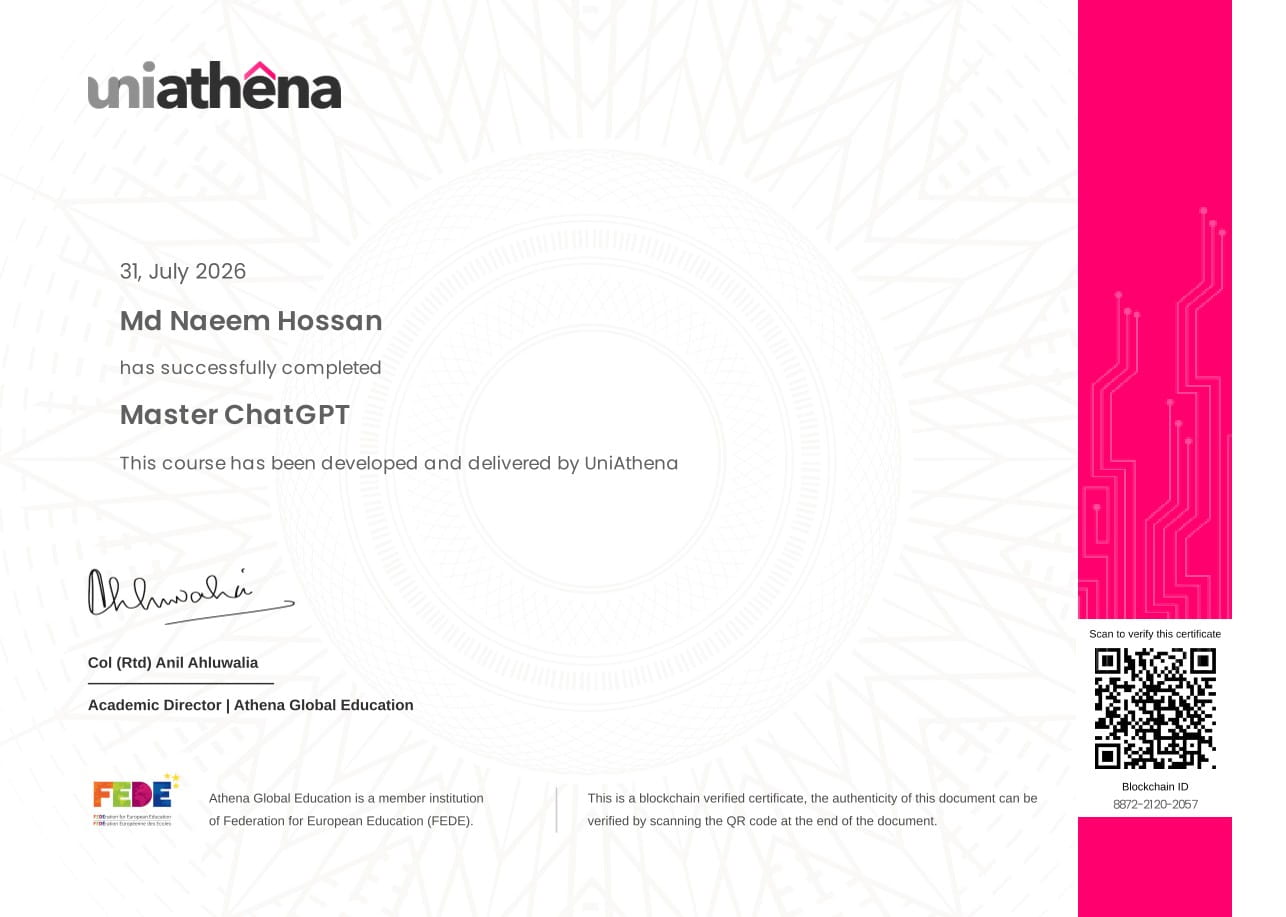
Master ChatGPT Certification
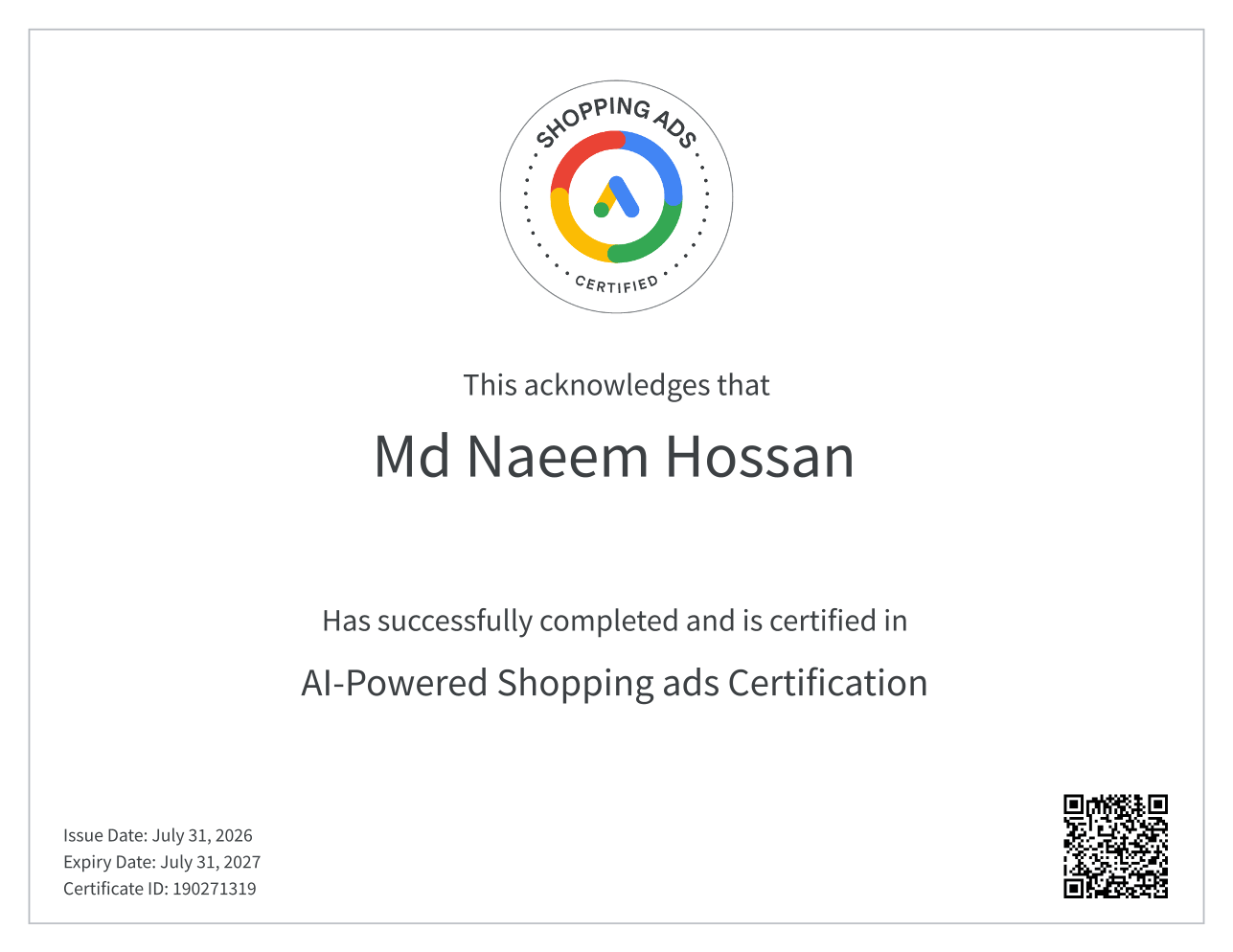
AI-Powered Shopping Ads Certification
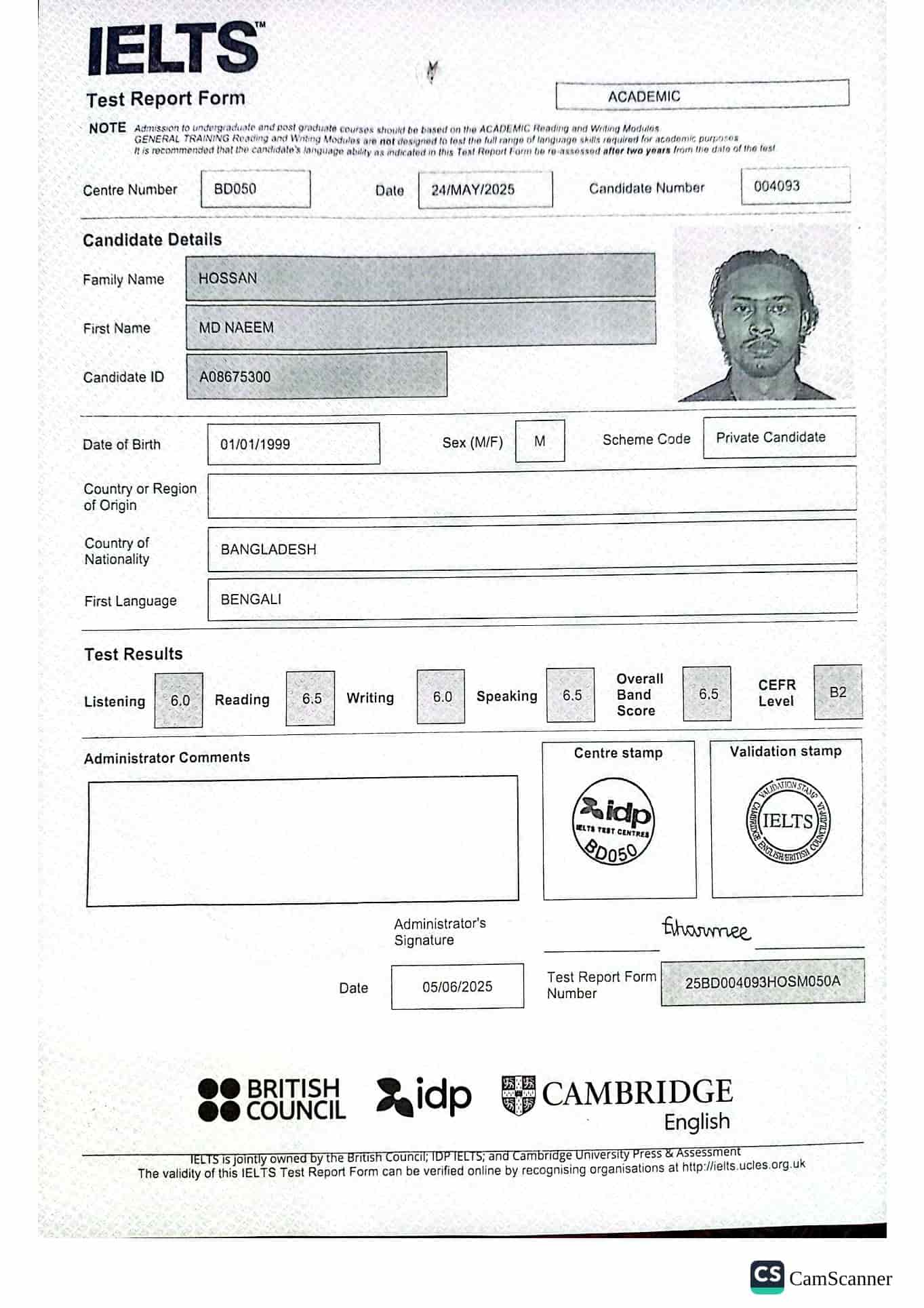
IELTS Certificate
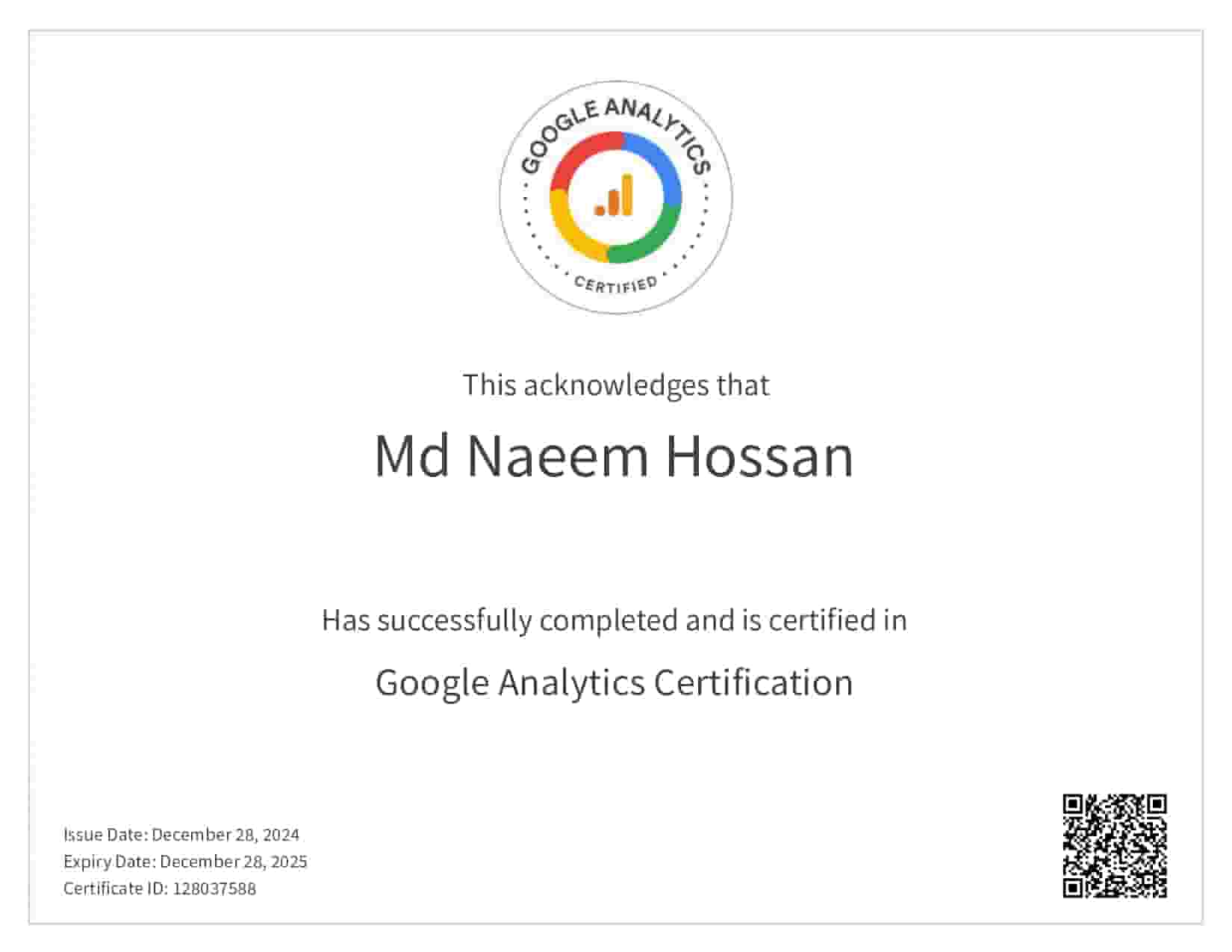
Google Analytics Certification
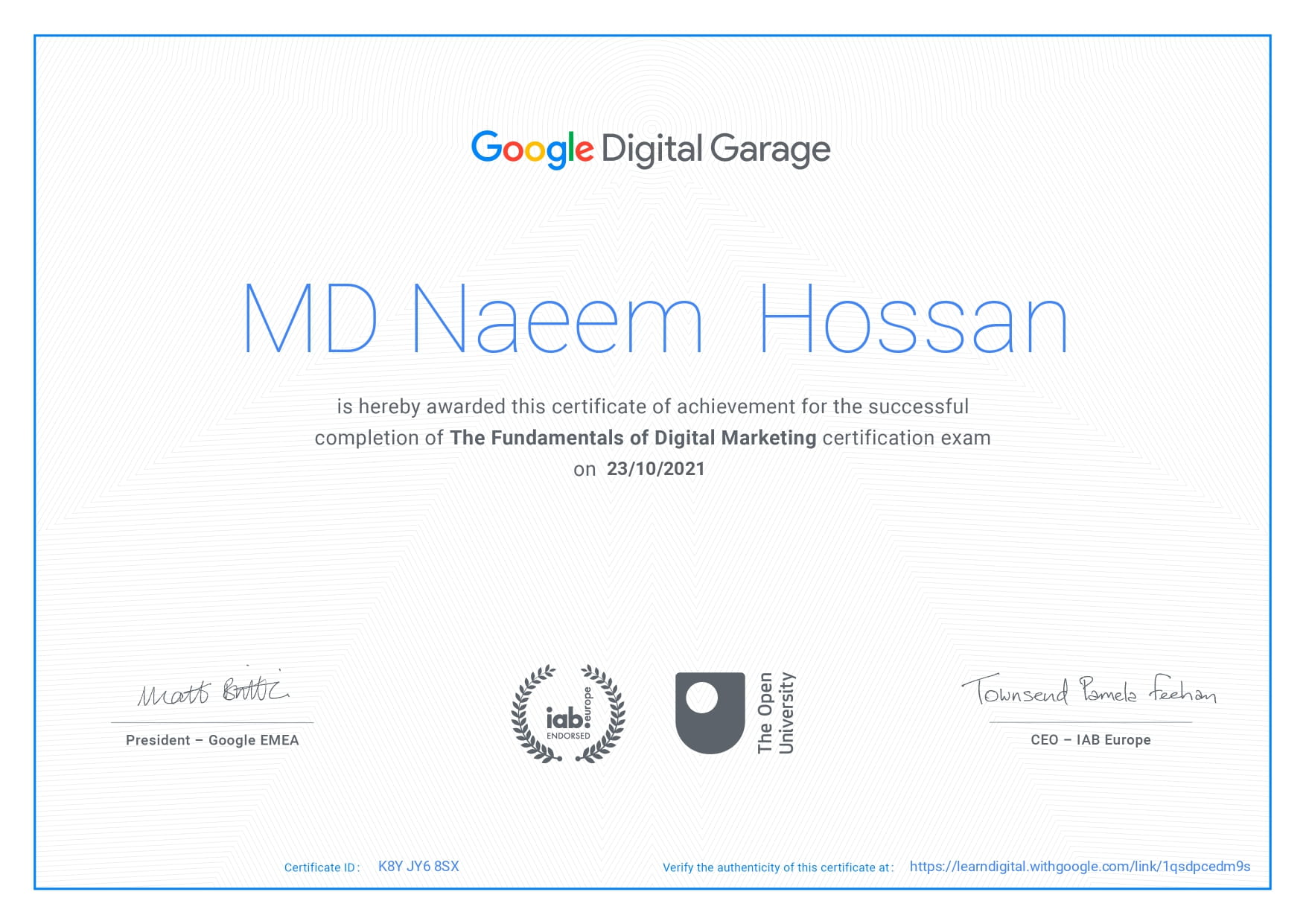
Google Digital Garage Certificate
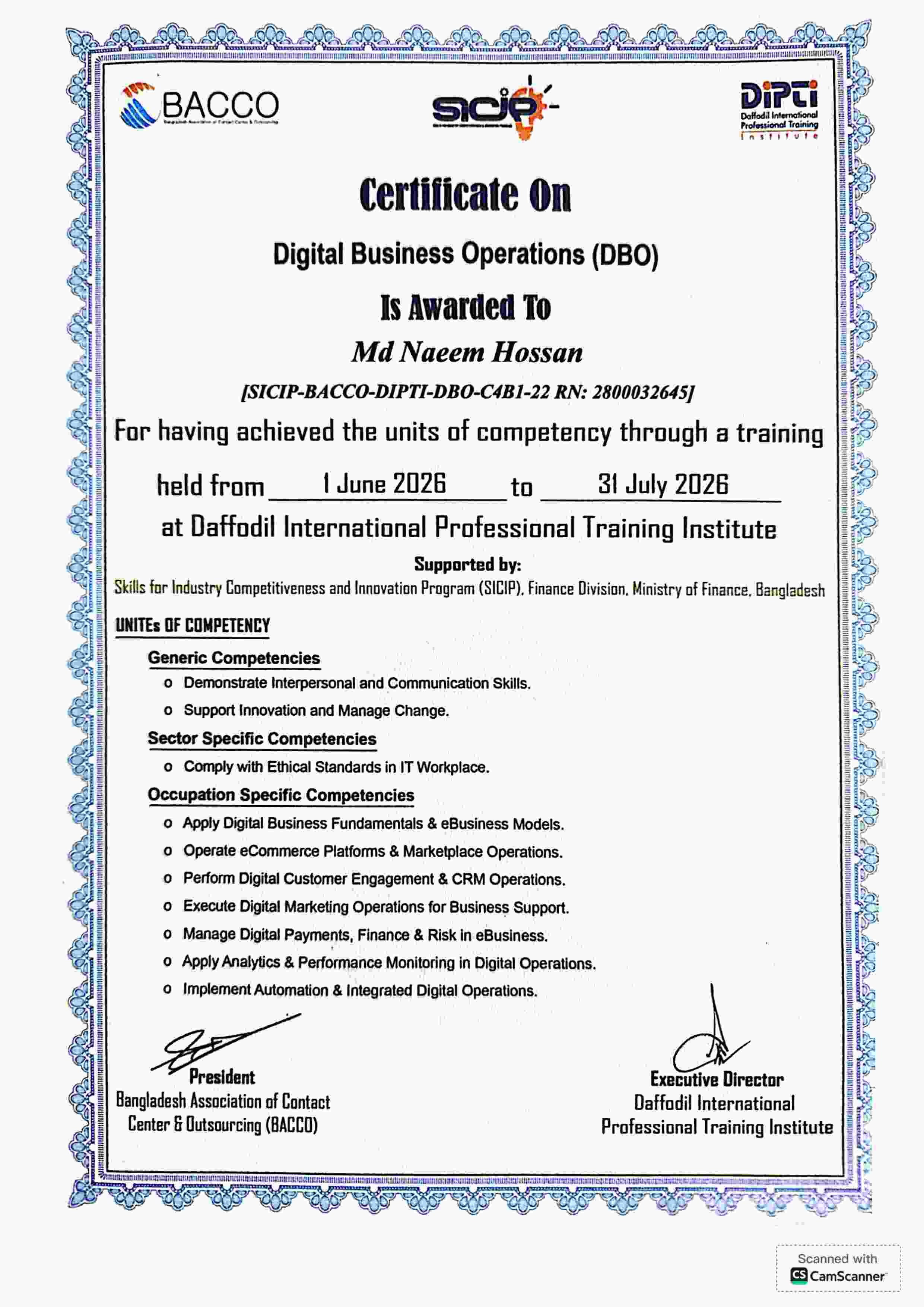
SICIP Digital Business Operations Certificate
Ready to make your list earn its keep?
If you have an email list you’re not using properly — or campaigns going out that aren’t converting — a short conversation will tell you what’s worth fixing first.
Book a free 30-minute consultation. Before we speak I’ll review your website, your current email setup and your sending activity, so the call starts with answers rather than questions. You’ll leave knowing where the gaps are and what I would do about them, whether or not you decide to work with me.
No pitch. No pressure. No advice pulled from a template.
- Currently accepting new clients
- Response within 24 hours
- London, United Kingdom
content and email marketing is one of nine channels I plan and run together. See how it connects to the rest on the digital marketing services hub — or read why one digital marketing strategist across every channel beats four separate suppliers.

I’m Md Naeem Hossan, an Email Marketing Specialist and digital marketing consultant based in London, working with UK businesses on strategy, execution and reporting — one accountable expert rather than a rotating team. [Insert verified years of experience.] More about me →